
Volume III · Inheritance & aftermath
The Houses
Names that outlast a single reign. Step inside the dynasties, peoples, and polities of the atlas: where they began, what they held, and what remained.
More ways into the collections
Houses, flags & older empires · explore, compare and practise
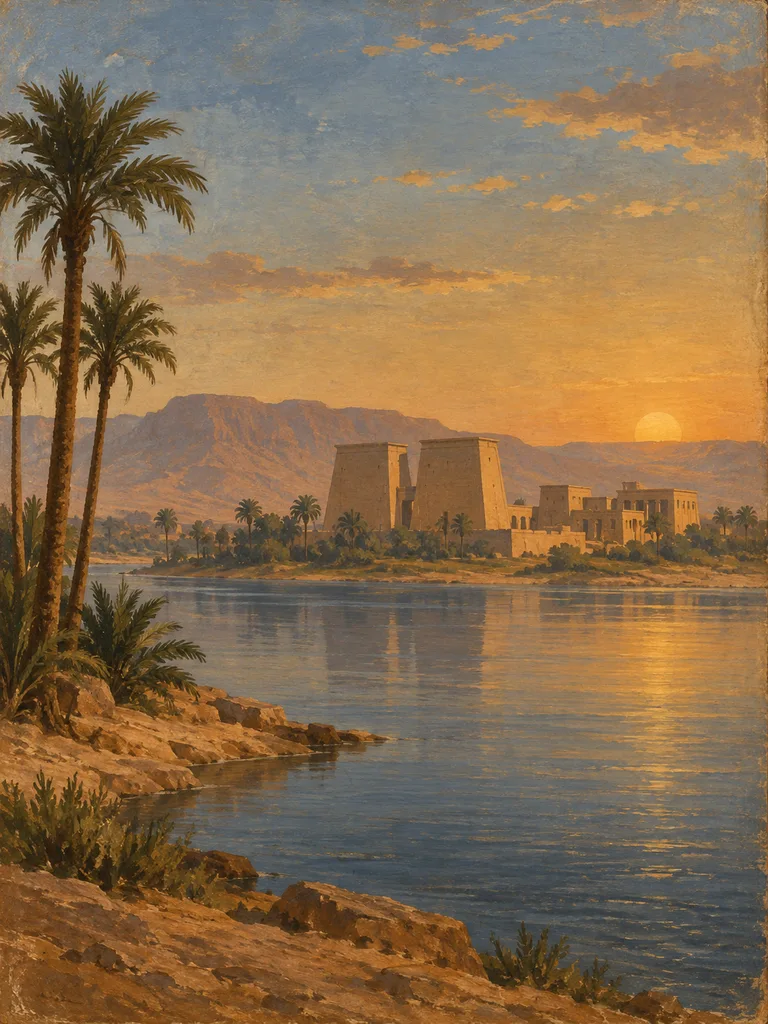
New Kingdom of Egypt
Along the Nile, beyond the Nile.
House of Bourbon
The crown, the court, the revolution.
House of Tudor
A new crown. A changed kingdom.
Egypt: an AI-generated imagined setting. Bourbon: a drawing of the French royal shield. Tudor: a rose badge. Each full page explains its illustration and links heraldic references.
Flags, arms & symbolsA lion, a lily, a crescent. Open the collection and read the stories carried by these designs.Explore the collectionClose the collection
A selection of documented designs. Dates and uses matter: a royal shield, a naval flag, and a modern confederacy flag tell different stories. Some belong to a much later period than the person pictured in the house entry.
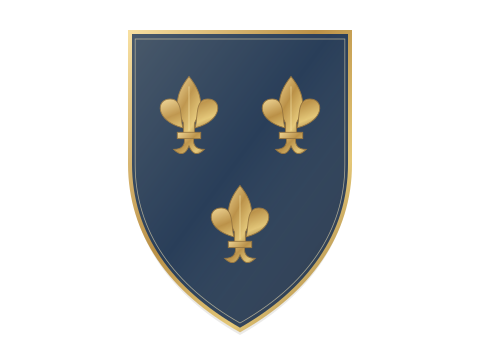 Coat of arms · Bourbon FranceThe French royal shieldBourbon France, as represented under Louis XIVRead the symbolClose the story
Three gold fleurs-de-lis on a blue field. The shield condenses the French royal emblem into a form that is recognisable at a glance.
The Versailles reference shows France with this shield in the decoration of the Hall of Mirrors. This is the French royal shield, not the arms of every Bourbon branch.
Explore Bourbon France → Flag · Bourbon FranceWhite colours at seaFrench royal navy; illustrated use in 1782Read the symbolClose the story
A plain white field. Its simplicity can conceal how much its meaning depends on where, when, and by whom it was flown.
Royal Museums Greenwich identifies white Bourbon colours on the French flagship at the Battle of the Saints in 1782. The use shown here is a naval ensign, not a universal Bourbon family flag.
Explore Bourbon France →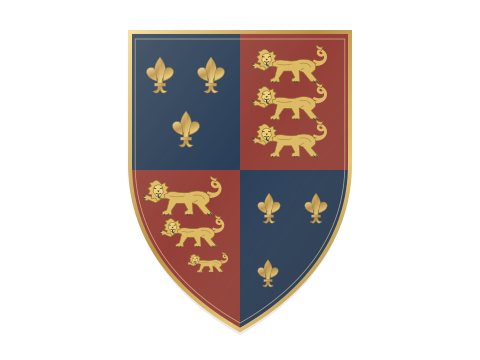 Coat of arms · House of TudorEngland and France, quarteredRoyal shield used by Elizabeth I, 1558-1603Read the symbolClose the story
The fleurs-de-lis of France alternate with the three lions of England. Quartering puts separate heraldic claims together on one shield.
This form was used by Elizabeth I and several earlier Tudor monarchs. Mary I used a different combination. The illustration shows the shield alone, without crown, supporters or motto.
Explore House of Tudor →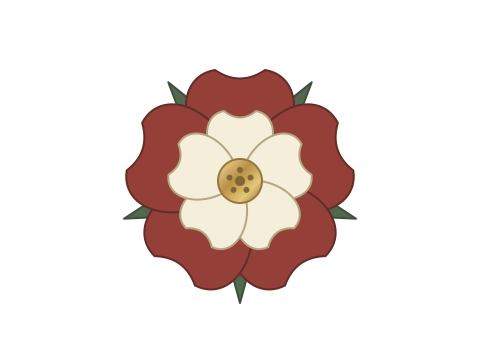 Badge · House of TudorThe Tudor roseTudor dynasty, 1485-1603Read the symbolClose the story
Five red outer petals surround five white inner petals. The two colours are combined within a single flower.
A dynastic badge, distinct from the royal coat of arms. This larger study preserves the rose that appeared in the first illustrated version of this volume.
Explore House of Tudor →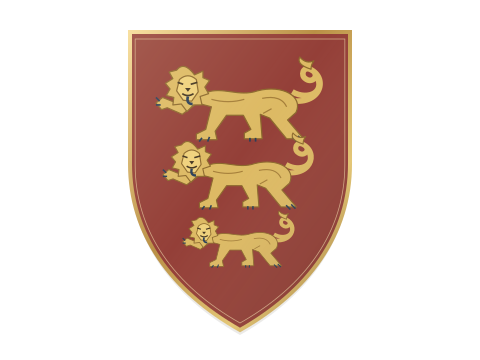 Coat of arms · House of PlantagenetThree lions of EnglandEnglish royal arms from the late 12th centuryRead the symbolClose the story
Three gold lions on red, walking with one forepaw raised and their faces turned toward the viewer: the heraldic pose called passant guardant.
Historic Royal Palaces identifies these arms with King John, Henry III and Edward I. Later royal shields combined them with other claims; this plate isolates the English design.
Explore House of Plantagenet →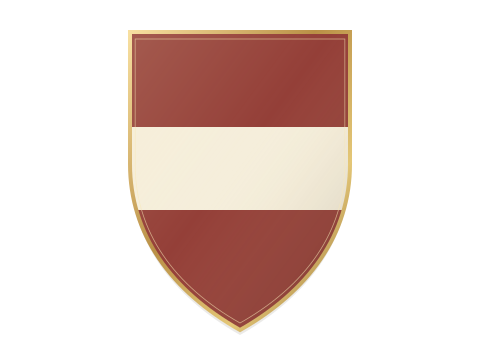 Arms component · House of HabsburgThe Austrian shieldShown within the arms of Maximilian I, c. 1504-1506Read the symbolClose the story
A white horizontal band crosses a red shield. In heraldic language, the band is a fess; the Austrian shield is also known as the Bindenschild.
A stained-glass panel of Maximilian I places this small shield on an imperial eagle. Here it is shown separately, not as a complete rendering of the Habsburg imperial arms.
Explore House of Habsburg →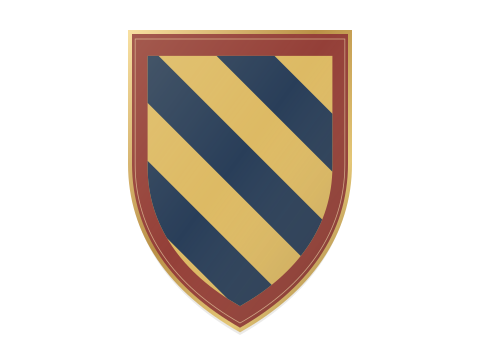 Arms component · Valois BurgundyBurgundy AncientA field within the composite ducal armsRead the symbolClose the story
Alternating gold and blue diagonal bands, enclosed by a red border. Heraldry calls this field Burgundy Ancient.
The dukes combined inherited territories within larger shields. This plate shows one component, not the whole coat of arms of Philip the Good. The linked catalogues show the wider combinations and their later inheritance.
- Rijksmuseum: the arms in a portrait of Philip the Good ↗
- Corpus Vitrearum: heraldic panels, c. 1504-1506 ↗
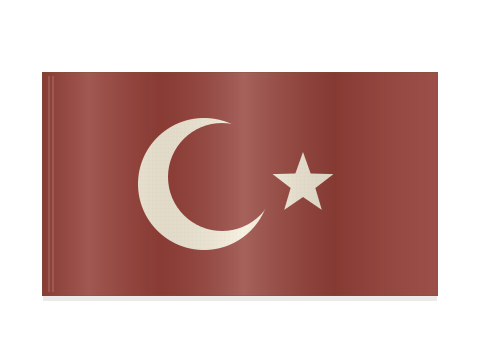 Flag · Ottoman dynastyCrescent and starLate Ottoman flag, after 1844Read the symbolClose the story
A white crescent opens toward a white star on a red field.
Royal Museums Greenwich identifies its surviving example as a flag of Turkey and its empire after 1844. This late Ottoman design belongs centuries after Osman I, whose portrait accompanies the house entry.
Explore Ottoman dynasty →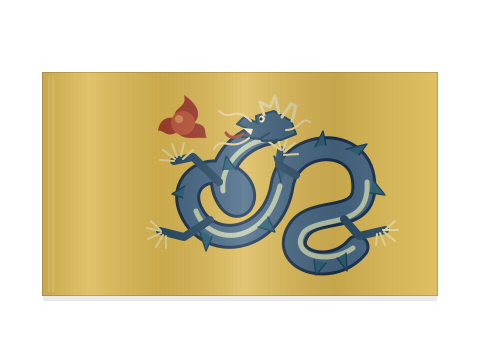 Flag · Qing dynastyThe yellow dragon flagLate Qing; this flag type from around 1889Read the symbolClose the story
A blue, curling dragon faces a red flaming pearl against yellow. The drawing simplifies the embroidered creature into an illustrated study.
Penn Museum dates its example to 1889-1904 and describes this flag type as adopted around 1889. It is much later than Kangxi. This is a schematic interpretation, not a facsimile of the museum textile.
Explore Qing dynasty →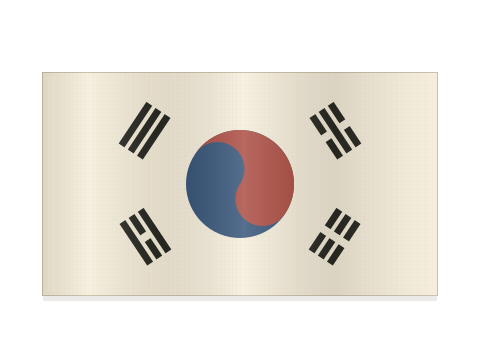 Flag · Joseon dynastyThe TaegeukgiAdopted under Gojong in 1883; early layouts variedRead the symbolClose the story
A red and blue taegeuk circle is surrounded by four trigrams on white. The trigrams represent sky, earth, water and fire.
The Korean Ministry of the Interior records adoption in 1883 and later changes in construction. This schematic uses the familiar modern arrangement to explain the elements; it is not an exact 1883 flag or the flag of earlier Joseon commanders.
Explore Joseon dynasty →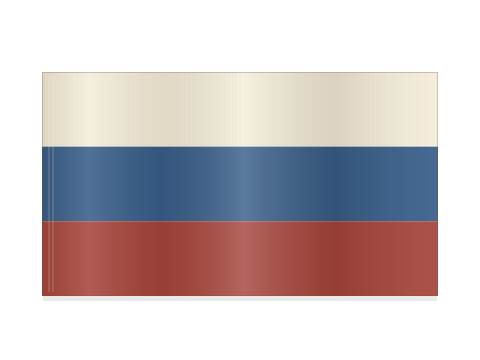 Flag · Romanov-era RussiaA merchant ensignRussian merchant ensign type, 1799-1917Read the symbolClose the story
White, blue and red horizontal bands. An ensign identifies a ship; the use of a flag matters as much as its colours.
Royal Museums Greenwich catalogues this type as a Russian merchant ensign of 1799-1917. It is shown for that maritime use, not as a personal imperial standard or a flag used throughout the Romanov period.
Explore Romanov-era Russia →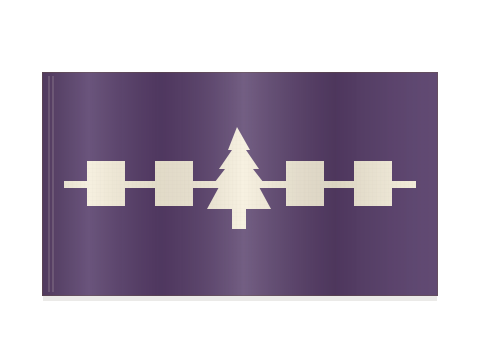 Flag · Haudenosaunee ConfederacyThe Hiawatha Belt flagContemporary flag drawn from an older living traditionRead the symbolClose the story
Four squares and a central Tree of Peace are connected across a purple field. The tree represents Onondaga; the connected figures recall the five founding nations.
The Onondaga Nation explains that the older Hiawatha Belt has become a flag flown today. This is a contemporary symbol of a living confederacy, not a reconstructed flag from its founding or a European coat of arms.
Explore Haudenosaunee Confederacy →Original illustrations for Dylanvir LLC, drawn with Codex after the linked historical references. These are schematic drawings, with simplified shapes and colours, not photographs of surviving objects. Each caption identifies the use shown.
Portraits throughout the register are imagined interpretations, created for Dylanvir LLC using Codex image generation from our original prompts.
The complete register
Explore the commanders44 of 44 entries · open a name to begin
With dated engagements in the atlas
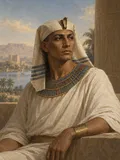 New Kingdom of EgyptEgypt; c. 1550-1070 BC (18th-20th Dynasties), founded after expelling the Hyksos
Egypt; c. 1550-1070 BC (18th-20th Dynasties), founded after expelling the Hyksos
People named in this entry
At its peak18th-19th Dynasties (Thutmose III to Ramesses II), Egypt's largest territorial extent from the Euphrates to Nubia
HeldNile Valley plus imperial holdings in Canaan and Syria and control of Nubia
FateDeclined after the 19th-20th Dynasties amid Sea Peoples invasions, economic strain and loss of the Levantine empire, ending c. 1070 BC
What remainedEgypt's imperial apogee; produced the first detailed battle records (Megiddo) and the first known international peace treaty (after Kadesh)
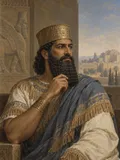 Neo-Assyrian EmpireAssyria (Ashur/Nineveh/Kalhu), northern Mesopotamia; conventionally 911-609 BC
Assyria (Ashur/Nineveh/Kalhu), northern Mesopotamia; conventionally 911-609 BC
People named in this entry
- Tiglath-Pileser III
- Sennacherib ↗
At its peak8th-7th centuries BC, largest empire the world had yet seen, spanning Mesopotamia, the Levant, and briefly Egypt
HeldFrom the Persian Gulf and Zagros to the Mediterranean and into Egypt at its height
FateCollapsed 612-609 BC when a Medo-Babylonian coalition destroyed Nineveh and the empire's remnants
What remainedSet the standard for imperial administration, a professional standing army, advanced siege engineering, and terror-as-policy (mass deportation) that influenced later empires
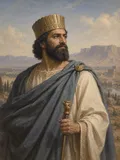 Achaemenid Empire (Persia)Founded by Cyrus the Great around 550 BC from the Persian heartland of Fars (Parsa) in southwestern Iran, after the Persians overthrew their Median overlords.
Founded by Cyrus the Great around 550 BC from the Persian heartland of Fars (Parsa) in southwestern Iran, after the Persians overthrew their Median overlords.
Founder in the recordCyrus the Great
People named in this entry
- Cyrus the Great
- Xerxes I ↗
At its peakLate 6th to early 5th century BC under Darius I and Xerxes I: the first empire to span three continents, stretching from the Indus valley and Central Asia to Egypt, Anatolia, and the fringe of Greece, ruling perhaps 40 percent of the world's population.
HeldIran, Mesopotamia, the Levant, Egypt, Anatolia, Armenia, the Caucasus, Central Asia, and the Indus valley.
FateBroken by Alexander of Macedon in a single decade: defeated at Issus (333 BC) and decisively at Gaugamela (331 BC); Persepolis was burned and the last king, Darius III, was murdered by his own satrap in 330 BC.
What remainedThe template for the multiethnic world empire. Its satrapy system, imperial road network, standardized coinage, and policy of local tolerance were inherited by Alexander, the Seleucids, and Rome. Persian identity and imperial ambition revived under the Parthians and, most fully, the Sasanians (224-651 AD), who consciously cast themselves as heirs of the Achaemenids and fought Rome and Byzantium to a standstill for four centuries.
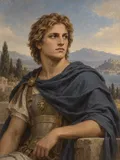 Argead Dynasty (House of Macedon)Macedon, northern Greece
Macedon, northern Greece
People named in this entry
At its peakUnder Alexander the Great — an empire from Greece to the Indus
HeldGreece, Egypt, the Near East, Persia, and into India
FateCollapsed within a generation of Alexander's death; his generals (the Diadochi) carved the empire into rival kingdoms.
What remainedSpread Hellenistic culture across three continents; the template of the world-conquering dynasty.
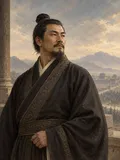 Qin DynastyState of Qin, western China (Warring States period)
State of Qin, western China (Warring States period)
People named in this entry
At its peak221 BC, with the unification of China under Qin Shi Huang
HeldUnified China from the Yellow and Yangtze basins outward
FateCollapsed in 206 BC, only years after its founding emperor's death
What remainedCreated the first unified Chinese empire, standardized writing, currency and measures, and connected early frontier walls; the name 'China' is often traced to Qin. (Bai Qi served the pre-unification State of Qin.)
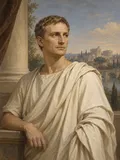 Julio-Claudian dynastyRome; the first imperial dynasty, descending from the union of the patrician Julii and Claudii families, beginning with Augustus in 27 BC.
Rome; the first imperial dynasty, descending from the union of the patrician Julii and Claudii families, beginning with Augustus in 27 BC.
People named in this entry
At its peakReign of Augustus (27 BC-AD 14), who established the Principate and the Pax Romana.
HeldThe Roman Empire around the Mediterranean, including Gaul, Hispania, Egypt, the Levant, and the Balkans.
FateEnded with the suicide of Nero in AD 68, triggering the civil war known as the Year of the Four Emperors.
What remainedCreated the institutional framework of the Roman Empire; comprised Augustus, Tiberius, Caligula, Claudius, and Nero.
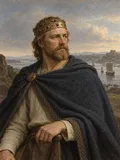 House of Gorm (Jelling Dynasty)Denmark
Denmark
People named in this entry
At its peakThe North Sea Empire under Cnut the Great — England, Denmark, and Norway
HeldDenmark, England, Norway, parts of Sweden
FateThe North Sea Empire fragmented soon after Cnut's death in 1035 for want of a strong heir to hold it together.
What remainedThe high-water mark of Scandinavian power in the British Isles; remembered for lawful rule as much as conquest.
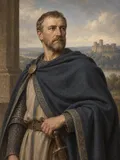 House of NormandyNormandy (descended from Norse settlers in France)
Normandy (descended from Norse settlers in France)
Founder in the recordWilliam the Conqueror ↗
People named in this entry
At its peakThe Norman conquest and rule of England from 1066
HeldNormandy and the Kingdom of England
FateGave way to the Angevin/Plantagenet line through the female line in the 12th century.
What remainedTransformed English language, law, landholding, and aristocracy, binding England to continental Europe.
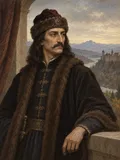 House of DrăculeștiWallachia (a branch of the House of Basarab)
Wallachia (a branch of the House of Basarab)
People named in this entry
At its peakRepeated holds on the Wallachian throne in the 15th century
HeldWallachia (southern Romania)
FateContended for the throne with the rival Dănești line; the dynasty persisted in the principality's turbulent succession.
What remainedDefense of Wallachia against Ottoman expansion — and, through Vlad III, the historical root of the Dracula legend.
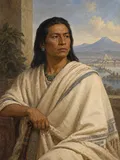 Aztec Empire (Triple Alliance)Alliance of Tenochtitlan, Texcoco, and Tlacopan formed in 1428 in the Valley of Mexico
Alliance of Tenochtitlan, Texcoco, and Tlacopan formed in 1428 in the Valley of Mexico
People named in this entry
At its peakEarly 16th century under Moctezuma II, dominating much of central Mexico through tribute
HeldCentral Mexico, from the Gulf to the Pacific in places (a tributary hegemony, not a unified state)
FateConquered by the Spanish-Tlaxcalan coalition; capital fell 1521
What remainedFoundation of colonial New Spain and of Mexican national identity; Nahuatl language and culture endure
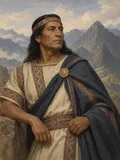 Inca Empire (Tawantinsuyu)Expanded from the kingdom of Cusco in the early 15th century, traditionally under Pachacuti
Expanded from the kingdom of Cusco in the early 15th century, traditionally under Pachacuti
Founder in the recordPachacuti
People named in this entry
- Pachacuti
- Atahualpa ↗
At its peakLate 15th-early 16th century; largest empire in the pre-Columbian Americas
HeldAndean South America from modern Colombia/Ecuador to central Chile and northwest Argentina
FateDecapitated at Cajamarca (1532); Cusco fell, and the Neo-Inca State at Vilcabamba was destroyed in 1572
What remainedRemarkable road, administrative, and storage systems; enduring Quechua language and Andean identity
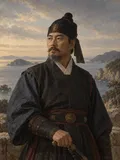 Joseon DynastyFounded 1392 by Yi Seong-gye (Taejo), succeeding Goryeo
Founded 1392 by Yi Seong-gye (Taejo), succeeding Goryeo
People named in this entry
At its peak15th century cultural and administrative flourishing (e.g. reign of Sejong the Great)
HeldKorean peninsula
FateEndured until 1897, when it was proclaimed the Korean Empire; later annexed by Japan in 1910
What remainedLong-lived Confucian Korean state; produced the Hangul alphabet and, through Yi Sun-sin, one of history's celebrated naval traditions.
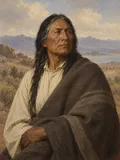 Northern Paiute (Numu)Great Basin; western Nevada, eastern California, southeastern Oregon
Great Basin; western Nevada, eastern California, southeastern Oregon
People named in this entry
- Numaga ↗
- Egan
At its peakPre-contact stewardship of Great Basin lakes, marshes, and pinyon ranges
HeldPyramid Lake, the Truckee, Carson, and Walker River systems and surrounding Great Basin
FateForced onto reservations such as Pyramid Lake and Walker River after the 1860 and 1878 conflicts
What remainedThe Numu endure as federally recognized tribes in Nevada and neighboring states, with Pyramid Lake central to their identity.
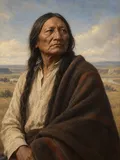 Lakota (Tetuwan Sioux)Northern Great Plains; westernmost division of the Oceti Sakowin (Seven Council Fires)
Northern Great Plains; westernmost division of the Oceti Sakowin (Seven Council Fires)
People named in this entry
- Sitting Bull ↗
- Crazy Horse ↗
- Red Cloud
At its peakMid-19th century dominance of the Northern Plains and Powder River Country
HeldPresent-day Dakotas, Nebraska, Wyoming, and Montana
FateConfined to reservations after the 1876-77 war and the 1890 Wounded Knee Massacre
What remainedAmong the most prominent nations of Plains resistance; the Lakota remain a vital, sovereign people today.
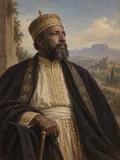 Ethiopian EmpireLong-lived Christian empire in the Horn of Africa (traditionally traced to 1270 under the Solomonic dynasty)
Long-lived Christian empire in the Horn of Africa (traditionally traced to 1270 under the Solomonic dynasty)
People named in this entry
At its peakReign of Menelik II (1889-1913), with the Adwa victory and territorial expansion
HeldRoughly the modern borders of Ethiopia after Menelik's expansion
FateContinued as an empire until the deposition of Haile Selassie in 1974; uniquely avoided sustained European colonization
What remainedSymbol of African independence after defeating Italy at Adwa in 1896; an enduring center of Christian and imperial tradition in Africa
Without a dated engagement span
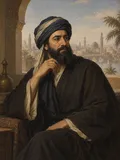 Abbasid CaliphateFounded in 750 after the Abbasid Revolution overthrew the Umayyads; descended from the Prophet Muhammad's uncle Abbas, with capital at Baghdad from 762.
Founded in 750 after the Abbasid Revolution overthrew the Umayyads; descended from the Prophet Muhammad's uncle Abbas, with capital at Baghdad from 762.
This entry does not include a separate member list.
At its peak8th-9th centuries under Harun al-Rashid and al-Ma'mun; the Islamic Golden Age centered on Baghdad and its House of Wisdom.
HeldAt its height, from North Africa across the Middle East to Persia and Central Asia.
FateLost real political power to regional dynasties and Turkic military leaders; Baghdad was sacked by the Mongols in 1258, ending the caliphate's effective rule.
What remainedThe Islamic Golden Age of science, philosophy, medicine, and translation; lasting administrative and cultural foundations of the Islamic world.
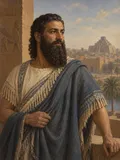 Akkadian EmpireMesopotamia, centered on the (still unlocated) city of Akkad; founded c. 2334 BC (disputed)
Mesopotamia, centered on the (still unlocated) city of Akkad; founded c. 2334 BC (disputed)
Founder in the recordSargon of Akkad
People named in this entry
- Sargon of Akkad
At its peakReign of Sargon and his grandson Naram-Sin, controlling Mesopotamia from the Persian Gulf toward the Mediterranean
HeldLower and Upper Mesopotamia and adjacent regions, with campaigns reaching Elam and the Levant
FateDeclined after c. 2154 BC amid revolts, famine and Gutian incursions; generally regarded as history's first empire
What remainedPioneered centralized multi-ethnic empire, a standing army, and Akkadian as an administrative language; a model for all later Mesopotamian empires
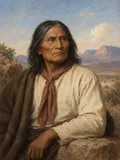 ApacheSouthwest borderlands (Apacheria), present-day Arizona, New Mexico, Texas, and northern Mexico
Southwest borderlands (Apacheria), present-day Arizona, New Mexico, Texas, and northern Mexico
People named in this entry
- Geronimo
At its peakDecades of effective guerrilla resistance across the Southwest into the 1880s
HeldApacheria, spanning the U.S.-Mexico borderlands
FateSubdued by 1886 with Geronimo's surrender; many held as prisoners of war for years
What remainedRenowned for endurance and guerrilla skill; multiple Apache nations remain sovereign today.
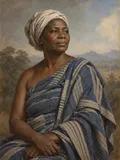 Ashanti EmpireAkan state founded c. 1701 around Kumasi by Osei Tutu, unified around the Golden Stool
Akan state founded c. 1701 around Kumasi by Osei Tutu, unified around the Golden Stool
People named in this entry
- Yaa Asantewaa
At its peak18th-19th centuries, a dominant West African power and major gold and trade hub
HeldMuch of present-day Ghana and adjacent areas
FateAnnexed by Britain after a series of Anglo-Ashanti wars, culminating after the 1900 War of the Golden Stool
What remainedFamed for its gold wealth, sophisticated political organization, and the sacred Golden Stool; a central pillar of Ghanaian heritage
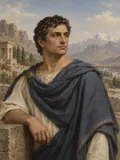 Greco-Bactrian and Indo-Greek KingdomBorn around 250 BC when the Greek satrap Diodotus broke Bactria (northern Afghanistan and southern Central Asia) away from the Seleucid Empire, one of the successor states seeded by Alexander's conquests and his Greek and Macedonian colonists.
Born around 250 BC when the Greek satrap Diodotus broke Bactria (northern Afghanistan and southern Central Asia) away from the Seleucid Empire, one of the successor states seeded by Alexander's conquests and his Greek and Macedonian colonists.
This entry does not include a separate member list.
At its peak2nd century BC: a prosperous Hellenistic kingdom of a thousand cities that pushed south over the Hindu Kush into the Indus valley and northwestern India, where under kings like Menander I the Indo-Greek offshoot ruled a wealthy Greek-Indian world.
HeldBactria and Sogdia (modern Afghanistan, Uzbekistan, Tajikistan) and, in its Indo-Greek phase, the Kabul valley, Gandhara, and the northwestern Indian subcontinent.
FateThe Bactrian homeland was overrun in the 2nd century BC by nomadic invasions from the steppe (the Yuezhi/Scythians), who later coalesced into the Kushan Empire. The Indo-Greek kingdoms south of the mountains lingered until roughly the start of the 1st century AD before being absorbed.
What remainedThe far-eastern edge of the Hellenistic world, a Greek civilization surviving for two centuries on the frontier of the steppe and India. Its lasting mark is cultural fusion: Greco-Buddhist art, above all the Gandhara school that first depicted the Buddha in human form using Greek sculptural style, and the transmission of Greek artistic and possibly philosophical ideas eastward. The Milinda Panha records a dialogue between the Greek king Menander and a Buddhist sage.
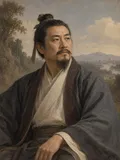 Han dynastyChina; founded by Liu Bang (Emperor Gaozu) in 202 BC after the fall of the Qin, divided into Western/Former Han and Eastern/Later Han around the Xin interregnum.
China; founded by Liu Bang (Emperor Gaozu) in 202 BC after the fall of the Qin, divided into Western/Former Han and Eastern/Later Han around the Xin interregnum.
This entry does not include a separate member list.
At its peakReign of Emperor Wu (141-87 BC), who expanded into Central Asia, opened the Silk Road, and made Confucianism the state ideology.
HeldChina proper plus expansion into Central Asia, northern Vietnam, and the Korean peninsula.
FateCollapsed into warlordism after the Yellow Turban Rebellion; formally ended in AD 220, beginning the Three Kingdoms period.
What remainedDefined Chinese cultural identity (the Han ethnonym), the Confucian bureaucratic state, the Silk Road, and major advances such as paper.
Haudenosaunee Confederacy (Iroquois / Six Nations)Union of Five Nations - Mohawk, Oneida, Onondaga, Cayuga, and Seneca - in the Northeastern Woodlands, founded before European contact under the Great Law of Peace; the Tuscarora joined c. 1722 to make Six Nations
Union of Five Nations - Mohawk, Oneida, Onondaga, Cayuga, and Seneca - in the Northeastern Woodlands, founded before European contact under the Great Law of Peace; the Tuscarora joined c. 1722 to make Six Nations
This entry does not include a separate member list.
At its peak17th-18th centuries; the dominant power broker of the Northeast, controlling much of the fur trade and holding the balance between the French and the British
HeldPresent-day upstate New York and the Great Lakes-St. Lawrence region, with influence extending across the Northeastern and Ohio-country Woodlands
FateSplit during the American Revolution when member nations took opposing sides; most land was lost after 1779-1794, but the Confederacy endures as a governing body across reservations in New York, Ontario, and Quebec
What remainedOne of the world's oldest participatory democracies; the Great Law of Peace is cited as an influence on American federal and democratic thought, and the Confederacy remains politically active
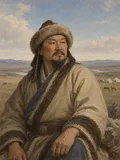 House of BorjiginMongolia
Mongolia
Founder in the recordGenghis Khan
People named in this entry
- Genghis Khan
At its peakThe largest contiguous land empire in history (13th century)
HeldFrom the Pacific coast of Asia to Eastern Europe and the Levant
FateFragmented into the Yuan dynasty, Ilkhanate, Golden Horde, and Chagatai Khanate.
What remainedReshaped Eurasia and the Silk Road; descent from Genghis became a prized claim to legitimacy for centuries of steppe rulers.
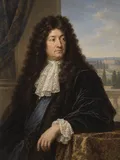 House of BourbonFrance; a branch of the Capetian dynasty that gained the French throne with Henry IV in 1589, later also ruling Spain and other states.
France; a branch of the Capetian dynasty that gained the French throne with Henry IV in 1589, later also ruling Spain and other states.
This entry does not include a separate member list.
At its peakReign of Louis XIV (1643-1715); absolute monarchy, the palace of Versailles, and France as the dominant European power.
HeldFrance, plus Bourbon branches ruling Spain, Naples, Sicily, and Parma.
FateOverthrown in the French Revolution (Louis XVI executed 1793); restored 1814-1830, then displaced; the Spanish Bourbon line continues today.
What remainedThe archetype of European absolutism, centralized bureaucratic monarchy, and an enduring royal line in Spain.
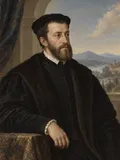 House of HabsburgOriginally the County of Habsburg (modern Switzerland); seated in Austria
Originally the County of Habsburg (modern Switzerland); seated in Austria
This entry does not include a separate member list.
At its peakThe empire of Charles V (16th c.) — Spain, Austria, the Low Countries, much of Italy, and the Americas
HeldAustria, Spain, the Low Countries, southern Italy, Bohemia, Hungary, and Spain's American empire
FateSplit into Spanish and Austrian branches. The Spanish line died out with the disabled, heirless Charles II in 1700, triggering the War of the Spanish Succession; the Austrian line endured until 1918.
What remainedProof that marriage and inheritance could build an empire larger than most conquerors won by the sword — and that dynastic inbreeding could rot it from within.
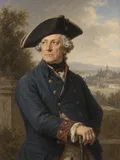 House of HohenzollernGermany; a Swabian dynasty that rose as Electors of Brandenburg, became Kings in Prussia in 1701, and German Emperors in 1871.
Germany; a Swabian dynasty that rose as Electors of Brandenburg, became Kings in Prussia in 1701, and German Emperors in 1871.
This entry does not include a separate member list.
At its peakReign of Frederick the Great (1740-1786) and the unification of Germany under Wilhelm I and Bismarck in 1871.
HeldBrandenburg-Prussia, expanding to the Kingdom of Prussia and then the German Empire dominating Central Europe.
FateEnded with the abdication of Kaiser Wilhelm II at the close of World War I in November 1918.
What remainedBuilt the Prussian state and a unified Germany; the Prussian military tradition and general-staff system.
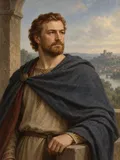 House of PlantagenetAnjou, France; ruling England from 1154 (Henry II) through Richard III in 1485, including the Lancaster and York cadet branches.
Anjou, France; ruling England from 1154 (Henry II) through Richard III in 1485, including the Lancaster and York cadet branches.
This entry does not include a separate member list.
At its peak12th-14th centuries; under Henry II the Angevin Empire stretched from Scotland to the Pyrenees, and Edward III opened the Hundred Years' War with victories such as Crecy (1346).
HeldEngland, large parts of France (Normandy, Anjou, Aquitaine), and lordship over Wales and Ireland.
FateThe dynasty consumed itself in the Wars of the Roses (1455-1487); Richard III died at Bosworth Field in 1485, ending Plantagenet rule.
What remainedMagna Carta (1215), the emergence of Parliament, English common law, and the long Anglo-French rivalry.
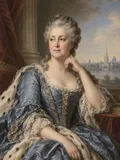 House of RomanovRussia; began with the election of Michael Romanov as tsar in 1613, ending the Time of Troubles.
Russia; began with the election of Michael Romanov as tsar in 1613, ending the Time of Troubles.
This entry does not include a separate member list.
At its peak18th-19th centuries under Peter the Great and Catherine the Great; Russia became a great European power and key in the defeat of Napoleon in 1812.
HeldThe Russian Empire, expanding across Siberia to the Pacific, into the Caucasus, Central Asia, and parts of Eastern Europe.
FateOverthrown in the February Revolution of 1917; Tsar Nicholas II abdicated and he and his family were executed by Bolsheviks in 1918.
What remainedBuilt the Russian Empire's vast territorial footprint and its emergence as a European great power.
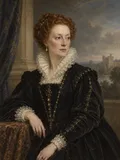 House of TudorEngland and Wales; of Welsh origin, taking the throne when Henry Tudor defeated Richard III at Bosworth in 1485.
England and Wales; of Welsh origin, taking the throne when Henry Tudor defeated Richard III at Bosworth in 1485.
This entry does not include a separate member list.
At its peakReign of Elizabeth I (1558-1603); the English Renaissance, the defeat of the Spanish Armada in 1588, and the start of overseas expansion.
HeldEngland, Wales (formally united by the Laws in Wales Acts), and lordship/kingship over Ireland.
FateEnded in 1603 with the death of the childless Elizabeth I; the crown passed to the Stuart James VI of Scotland.
What remainedThe English Reformation and Church of England, a strengthened centralized monarchy, and the foundations of England as a naval and Protestant power.
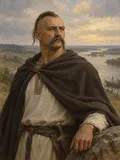 Khazar KhaganateA Turkic steppe polity that emerged in the mid-7th century (c. 650) on the lower Volga and the Pontic-Caspian steppe north of the Caucasus, growing out of the western Turkic khaganate after it fragmented.
A Turkic steppe polity that emerged in the mid-7th century (c. 650) on the lower Volga and the Pontic-Caspian steppe north of the Caucasus, growing out of the western Turkic khaganate after it fragmented.
This entry does not include a separate member list.
At its peak8th to early 10th century: a dominant power controlling the north-south and east-west trade between the Abbasid Caliphate, Byzantium, and the forests and rivers of the north, taxing the flow of furs, slaves, and silver and fielding armies that fought the Arabs to a standstill in the Caucasus.
HeldThe Volga-Caspian and Pontic steppe: the lower Volga (capital at Atil), the northern Caucasus, Crimea, and loose overlordship of neighboring Slavic and steppe peoples.
FateBroken in the 960s by the rising Rus under Sviatoslav of Kiev, who sacked the Khazar cities around 965-969. The khaganate disintegrated, absorbed by the Rus, the Pechenegs, and later steppe powers.
What remainedFor three centuries the Khazars were the shield of eastern Europe, blocking Arab expansion north of the Caucasus and stabilizing the steppe corridor along which Rus, Byzantine, and Islamic trade flowed. Their most famous act was a religious one: the ruling elite's conversion to Judaism, a deliberate third path between Christian Byzantium and the Muslim Caliphate that has fascinated and divided historians ever since.
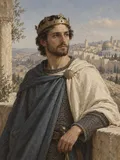 Kingdom of Jerusalem (Crusader State)Established in 1099 when the First Crusade stormed Jerusalem, a Latin Christian kingdom planted on the Levantine coast by European crusaders thousands of miles from home.
Established in 1099 when the First Crusade stormed Jerusalem, a Latin Christian kingdom planted on the Levantine coast by European crusaders thousands of miles from home.
This entry does not include a separate member list.
At its peak12th century, roughly 1130s-1180s: at its height under kings like Baldwin III and Amalric the kingdom controlled the coast from Beirut to Gaza and inland to the Jordan, dominated by great castles and the military orders, and briefly extended influence toward Egypt.
HeldA thin strip along the eastern Mediterranean coast (the Levant), with the holy city of Jerusalem inland, ringed by the allied crusader states of Tripoli, Antioch, and Edessa.
FateCrippled at the Battle of Hattin in 1187, where Saladin destroyed the kingdom's field army; Jerusalem itself surrendered to Saladin months later. The rump kingdom clung to the coast, capital at Acre, through further crusades until the fall of Acre to the Mamluks in 1291 extinguished it.
What remainedThe defining example of the over-extended garrison-state, a Western European kingdom transplanted onto hostile ground, permanently outnumbered and dependent on the sea. It shaped castle architecture, the military orders (Templars and Hospitallers), Italian naval-commercial power in the eastern Mediterranean, and the whole memory of the Crusades in both Europe and the Islamic world.
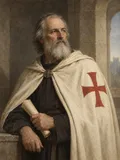 Knights Templar (The Poor Fellow-Soldiers of Christ and of the Temple of Solomon)Kingdom of Jerusalem / Latin Christendom
Kingdom of Jerusalem / Latin Christendom
This entry does not include a separate member list.
At its peakBy the 13th century, roughly 15,000-20,000 members and a network of preceptories, farms, castles, and banking houses across Latin Christendom; a standing corps of heavily armored warrior-monks and the wealthiest, most trusted financial institution in Europe.
HeldFounded on the Temple Mount in Jerusalem (from which the Order took its name), then headquartered at Acre, then Cyprus after the Crusader states fell. Estates and banking houses stretched from the Holy Land across France, England, Iberia, and Italy.
FateSuppressed by King Philip IV of France, who was deep in debt to the Order. On Friday 13 October 1307 he had the Templars of France arrested en masse on charges of heresy, blasphemy, and sodomy; confessions were extracted under torture. Pressured by Philip, Pope Clement V dissolved the Order in 1312. The last Grand Master, Jacques de Molay, was burned at the stake in Paris in 1314 after publicly recanting his forced confession.
What remainedWarrior-monks who also pioneered international banking: a traveler could deposit funds at one preceptory and draw on them at another, an early letter-of-credit system that made the Order Europe's first multinational bank. Their brutal, public destruction fed centuries of legend and conspiracy. The Chinon Parchment, rediscovered in the Vatican Secret Archives in 2001, records that Clement V had secretly absolved the Templar leaders of heresy in 1308 - evidence that the suppression was driven far more by royal debt and politics than by genuine belief in their guilt.
Maya CivilizationMesoamerican culture of the Yucatan Peninsula, the Guatemalan highlands, and the surrounding lowlands; emerged in the Preclassic period (c. 2000 BC) and flowered in the Classic period
Mesoamerican culture of the Yucatan Peninsula, the Guatemalan highlands, and the surrounding lowlands; emerged in the Preclassic period (c. 2000 BC) and flowered in the Classic period
This entry does not include a separate member list.
At its peakClassic period (c. 250-900 AD); dozens of competing city-states with monumental architecture, dominated in turn by the Tikal and Snake (Kaan) hegemonies
HeldYucatan Peninsula and the Mesoamerican lowlands and highlands across present-day Guatemala, Belize, southern Mexico, and parts of Honduras and El Salvador
FateThe southern lowland cities collapsed and were largely abandoned c. 800-900 AD; Postclassic centers persisted in the north (Chichen Itza, Mayapan) until the Spanish conquest was completed in 1697 with the fall of Nojpeten
What remainedThe only fully developed writing system of the pre-Columbian Americas; advanced mathematics with a positional zero, the Long Count calendar, and precise astronomy; roughly six million Maya people and their languages endure today
Mississippian Culture (Cahokia)Mound-building Mississippian culture of the North American Eastern Woodlands; Cahokia arose in the Mississippi floodplain near the confluence of the Mississippi, Missouri, and Illinois rivers, opposite modern St. Louis
Mound-building Mississippian culture of the North American Eastern Woodlands; Cahokia arose in the Mississippi floodplain near the confluence of the Mississippi, Missouri, and Illinois rivers, opposite modern St. Louis
This entry does not include a separate member list.
At its peakc. 1050-1200 AD; at its height Cahokia held an estimated 15,000-20,000 people, larger than contemporary London, and was the largest city north of Mexico
HeldThe American Bottom of the Mississippi floodplain in present-day Illinois, anchoring a trade and cultural network that reached the Great Lakes, the Gulf Coast, and the Great Plains
FateDeclined and was fully abandoned by c. 1350-1400 AD, well before European contact; the reasons remain debated
What remainedMonks Mound and roughly 120 earthen mounds survive as a UNESCO World Heritage Site; proof that urban, hierarchical society developed independently in North America
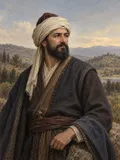 Ottoman dynasty (House of Osman)Founded by Osman I in northwestern Anatolia around 1299; named after him.
Founded by Osman I in northwestern Anatolia around 1299; named after him.
This entry does not include a separate member list.
At its peak16th-17th centuries under Suleiman the Magnificent; the empire spanned the Balkans, Anatolia, the Levant, Egypt, Mesopotamia, and North Africa, and took Constantinople in 1453.
HeldSoutheastern Europe, Anatolia, the Middle East, and North Africa around the eastern Mediterranean.
FateDeclined from the late 17th century; dissolved after defeat in World War I, with the sultanate abolished in 1922 and the Republic of Turkey founded in 1923.
What remainedOver six centuries of continuous dynastic rule, the Ottoman caliphate, the millet system, and lasting cultural and administrative imprint across the Balkans and Middle East.
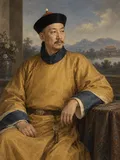 Qing dynastyManchu dynasty founded by the Aisin Gioro clan; proclaimed in 1636 and ruling China after the conquest of Beijing in 1644.
Manchu dynasty founded by the Aisin Gioro clan; proclaimed in 1636 and ruling China after the conquest of Beijing in 1644.
This entry does not include a separate member list.
At its peakHigh Qing era under the Kangxi, Yongzheng, and Qianlong emperors (roughly 1683-1799); largest territorial extent and population in Chinese history.
HeldChina proper, Manchuria, Mongolia, Tibet, Xinjiang, and Taiwan.
FateWeakened by the Opium Wars, the Taiping Rebellion, and foreign encroachment; overthrown in the Xinhai Revolution, with the last emperor abdicating in 1912.
What remainedDefined the modern territorial extent of China; the Eight Banners military system and a multiethnic empire under Manchu rule.
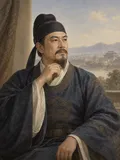 Tang dynastyChina; founded by Li Yuan (Emperor Gaozu) of the Li family in 618 after the collapse of the Sui.
China; founded by Li Yuan (Emperor Gaozu) of the Li family in 618 after the collapse of the Sui.
This entry does not include a separate member list.
At its peak7th-8th centuries under Taizong and Xuanzong; a cosmopolitan golden age of poetry, trade along the Silk Road, and military reach into Central Asia.
HeldChina proper plus protectorates extending into Central Asia, the Tarim Basin, and parts of Korea and Vietnam.
FateSeverely weakened by the An Lushan Rebellion (755-763); fragmented and fell in 907, leading to the Five Dynasties and Ten Kingdoms period.
What remainedA high point of Chinese civilization in poetry (Li Bai, Du Fu), Buddhism, the expanded civil-service examination system, and law codes copied across East Asia.
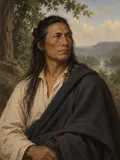 Tecumseh's ConfederacyOld Northwest; pan-Indian alliance centered on the Shawnee at Prophetstown
Old Northwest; pan-Indian alliance centered on the Shawnee at Prophetstown
Founder in the recordTecumseh
People named in this entry
- Tecumseh
At its peak1808-1813, allied with Britain in the War of 1812
HeldOld Northwest (present-day Ohio, Indiana, and the Great Lakes region)
FateCollapsed after Tecumseh's death at the Battle of the Thames in 1813
What remainedA high-water mark of pan-Indian political unity and an enduring symbol of resistance.
TeotihuacanCity-state that arose in the Basin of Mexico around 100 BC, in the central Mexican highlands northeast of the later site of Tenochtitlan
City-state that arose in the Basin of Mexico around 100 BC, in the central Mexican highlands northeast of the later site of Tenochtitlan
This entry does not include a separate member list.
At its peakc. 100-450 AD; with an estimated 100,000-200,000 inhabitants it was among the largest cities in the world, the dominant power and cultural fountainhead of Mesoamerica
HeldThe city and the Basin of Mexico core, projecting economic, religious, and military influence across Mesoamerica as far as the Maya lowlands of Guatemala
FateIts monumental core was sacked and burned c. 550-650 AD and the city was largely depopulated; its very name and rulers were forgotten, and the later Aztecs named it 'the place where the gods were created'
What remainedThe Pyramids of the Sun and Moon and the Avenue of the Dead endure as a UNESCO World Heritage Site; its art, religion, and city planning shaped every later Mesoamerican civilization, the Aztecs included
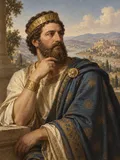 The Kingdoms of Anatolia (Asia Minor)Not one dynasty but a peninsula. Anatolia (modern Turkey) is history's great crossroads, the land bridge between Europe and Asia, and it has been a kingdom-factory for more than three millennia. This entry walks the succession of powers that held the bridge rather than a single bloodline.
Not one dynasty but a peninsula. Anatolia (modern Turkey) is history's great crossroads, the land bridge between Europe and Asia, and it has been a kingdom-factory for more than three millennia. This entry walks the succession of powers that held the bridge rather than a single bloodline.
This entry does not include a separate member list.
At its peakEvery age had its Anatolian power. The Hittites rivaled Egypt and Babylon in the Bronze Age; Lydia under Croesus was a byword for wealth; Byzantine Anatolia was the recruiting and tax heartland of the medieval Roman Empire; and the peninsula finally became the launch-base of the Ottoman world empire.
HeldThe Anatolian peninsula and its coasts and highlands, the contested hinge between the Aegean/Balkans to the west and Mesopotamia, the Caucasus, and Iran to the east.
FateEach holder was in turn displaced by the next wave from a different direction, until the Turks arrived after Manzikert (1071) and never left. The Seljuk Sultanate of Rum Turkified the interior; out of its wreckage the Ottomans rose to hold the bridge for six centuries, succeeded by the Republic of Turkey.
What remainedThe lesson of the crossroads itself: whoever holds Anatolia holds the passage between two continents, the chokepoint of the Straits, and one of the richest recruiting grounds in the world. It made the fortune of every power that took it and doomed every empire (Byzantium above all) that lost it.
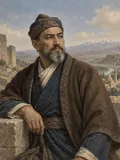 Timurid dynastyCentral Asia; founded by Timur (Tamerlane) around 1370, a Turco-Mongol conqueror who claimed legitimacy through Genghisid connection by marriage.
Central Asia; founded by Timur (Tamerlane) around 1370, a Turco-Mongol conqueror who claimed legitimacy through Genghisid connection by marriage.
This entry does not include a separate member list.
At its peakLate 14th-15th centuries; Timur's conquests from Anatolia to India, and a cultural golden age in Samarkand and Herat under successors like Shah Rukh and Ulugh Beg.
HeldPersia, Transoxiana, parts of Central Asia, the Caucasus, Mesopotamia, and incursions into India and Anatolia.
FateFragmented after Timur's death in 1405; the Persian/Central Asian realm fell by the early 16th century, but a descendant, Babur, founded the Mughal Empire in 1526.
What remainedA flowering of Persianate art, architecture, and science (Ulugh Beg's astronomy); ancestral line of the Mughal dynasty.
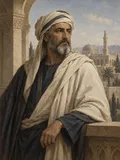 Umayyad CaliphateFounded in 661 by Mu'awiya I of the Umayyad clan of Mecca after the First Fitna; capital at Damascus.
Founded in 661 by Mu'awiya I of the Umayyad clan of Mecca after the First Fitna; capital at Damascus.
This entry does not include a separate member list.
At its peakEarly 8th century; the largest contiguous expansion of early Islam, reaching the Iberian Peninsula in the west and the Indus and Central Asia in the east.
HeldFrom Al-Andalus (Iberia) and North Africa across the Middle East to Persia, Central Asia, and Sindh.
FateOverthrown by the Abbasid Revolution in 750; a survivor, Abd al-Rahman I, founded the Umayyad Emirate of Cordoba in Iberia.
What remainedThe first hereditary Islamic dynasty, Arabic as the administrative language, early Islamic coinage, and the conquests that spread Islam across three continents.
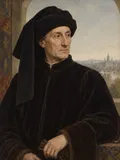 Valois Duchy of BurgundyCreated in 1363 when King John II of France granted the duchy of Burgundy to his youngest son, Philip the Bold, founding a cadet branch of the House of Valois that would soon outshine the crown it sprang from.
Created in 1363 when King John II of France granted the duchy of Burgundy to his youngest son, Philip the Bold, founding a cadet branch of the House of Valois that would soon outshine the crown it sprang from.
This entry does not include a separate member list.
At its peakMid-15th century under Philip the Good and Charles the Bold: the richest court in Europe, master of the wool and cloth wealth of Flanders and the Low Countries, patron of Van Eyck and the Order of the Golden Fleece, and a power that dealt with France and England as an equal.
HeldA discontinuous realm straddling the France-Empire border: the two Burgundies in the east and, to the north, the immensely wealthy Low Countries (Flanders, Brabant, Holland, Hainaut, Luxembourg), never quite joined into one contiguous state.
FateCharles the Bold gambled on forging a kingdom to bridge his northern and southern lands and was killed at the Battle of Nancy in 1477. His inheritance was partitioned: France seized the duchy of Burgundy itself, while the rich Low Countries passed through his daughter Mary's marriage to Maximilian of Habsburg, carrying that wealth into the Habsburg empire.
What remainedThe classic 'middle kingdom' that almost was: a would-be Lotharingian state between France and Germany that dissolved at the moment it reached for a crown. Its collapse fed the two powers that framed early modern Europe, handing the Low Countries to the Habsburgs and setting up the long Valois-Habsburg and Franco-Burgundian struggles.
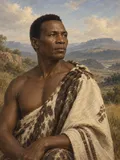 Zulu KingdomFormed from the Zulu clan in present-day KwaZulu-Natal, consolidated under Shaka c. 1816
Formed from the Zulu clan in present-day KwaZulu-Natal, consolidated under Shaka c. 1816
Founder in the recordShaka kaSenzangakhona
People named in this entry
- Shaka kaSenzangakhona
At its peakZenith under Shaka (founded c. 1816), passing through Dingane and Mpande to Cetshwayo, the dominant power in southeastern Africa until 1879
HeldMuch of present-day KwaZulu-Natal and surrounding regions
FateDefeated in the Anglo-Zulu War of 1879 - even after annihilating a British column at Isandlwana - and annexed and partitioned by Britain
What remainedRenowned for its disciplined regimental army and the envelopment tactics that influenced Southern African warfare; remains a powerful cultural and historical identity
Made for Dylanvir LLC · about these images
The painted portraits and landscapes were created here with Codex image generation from our original prompts, written for this collection. They are original generated illustrations, not photographs or reproductions of archival portraits.
Each house portrait accompanies a person already named in its account. Faces, clothing, and settings are imagined; a realistic painting does not establish a historical likeness. Entries without a named figure keep their text without an invented representative.
The flags and heraldic drawings are original illustrations for Dylanvir LLC, drawn with Codex after their linked historical references. The designs themselves belong to their historical or living traditions. Captions distinguish flags, coats of arms, parts of arms, and badges, and identify the period and use shown.
About this reading · a wider meaning of “Houses”
This volume began as a continuous register. Its entries now also have individual pages with chapters to open as you read. The complete text remains available in the register above.
The earlier introduction called all 44 entries “dynasties”. The register also includes peoples, confederacies, orders, and other polities, so this reading uses “entries”. The historical title, The Houses, remains.
Where an engagement span appears, it comes from the entry's commanders in Volume I. It describes the atlas's records, not the lifetime of a dynasty or people. Entries without a span were previously grouped under “Houses whose commanders await their battles”. About the atlas's sources ↗