Dylanvir
Atlas

Volume II · The Modern Age

Numaga

War leader and diplomat of the Pyramid Lake Northern Paiute

Northern Paiute (Numu) ↗
3 engagements in this atlasRecorded here: 1860

A reading of the engagements that name Numaga. These records trace part of a life, not a complete biography.

Begin the account ↓
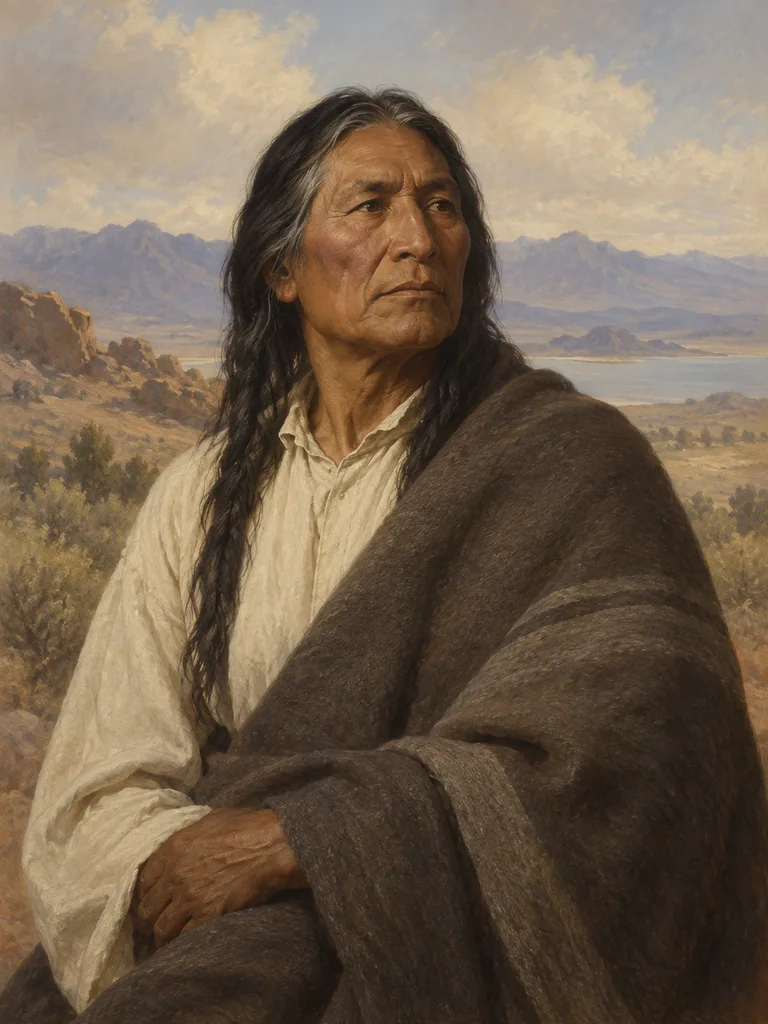
Imagined painted interpretation of Numaga.
Created for Dylanvir LLC using Codex image generation from our original prompts. AI-generated interpretation. Face and costume are imagined.

Follow one chapter at a time, or open the whole account.

1860

First Battle of Pyramid Lake

The setting
Near the Truckee River south of Pyramid Lake, Utah Territory (present-day Nevada)

Arid Great Basin valley with brush, river bottom, and a narrow defile that channeled the advancing column

Reveal the outcome

Recorded sideNorthern Paiute (with Bannock and Shoshone allies)

Recorded resultDecisive victory

Paiute victory; the volunteer column was lured into a trap and broken, with roughly 76 of the militia killed (exact toll disputed), including Ormsby.

How the atlas explains it

Numaga's warriors used a feigned withdrawal to draw the untrained, overconfident militia into a constricted position, then exploited terrain and superior mounted mobility to envelop and rout them.

What followed

One of the most lopsided Native tactical victories in the Great Basin. It humiliated the territory's settlers and forced a far larger, better-organized second expedition, illustrating how a well-led ambush could defeat numbers while the broader war could not be won against sustained reinforcement.

Full engagement entry, figures and caveats ↗

1860

Second Battle of Pyramid Lake

The setting
Pyramid Lake / Truckee River area, Utah Territory (present-day Nevada)

Same arid valley and river corridor as the first battle

Reveal the outcome

Recorded sideNorthern Paiute (with allies)

Recorded resultWithdrawal/defeat

U.S. victory. The larger, disciplined force under Hays, including Army regulars and artillery, defeated the Paiute, who broke off and dispersed. Note: commander id william-ormsby is listed only for cross-reference continuity and was already dead by this battle; the second expedition was led by Hays.

How the atlas explains it

Numbers, discipline, and artillery firepower combined to negate the ambush advantages that had worked in May; the Paiute could not sustain a stand-up fight against a coordinated combined-arms force.

What followed

Effectively ended large-scale combat in the Pyramid Lake War and confirmed the pattern of the wider Indian Wars: superior numbers, firepower, and logistics overcoming Native tactical skill.

Full engagement entry, figures and caveats ↗

1860

Pyramid Lake War (Paiute War)

The setting
Pyramid Lake, Nevada Territory (about 40 minutes north of modern Reno)

High-desert lake country - sagebrush flats, low ridges, and a narrow bend of the Truckee River where the trail funneled between the river and rising ground

Reveal the outcome

Recorded sideNorthern Paiute, Bannock, and Western Shoshone

Recorded resultVictory in the first battle; defeat in the second

Two battles with opposite results. In the FIRST Battle of Pyramid Lake the settler militia was drawn into a defile and routed - Major William Ormsby was among the dead. Weeks later a reinforced column of U.S. regulars and volunteers won the SECOND battle, ending organized Paiute resistance.

How the atlas explains it

The Comstock Lode silver boom flooded Paiute land with miners, and the Williams Station incident lit the fuse. In the first battle the Paiute under Numaga used the terrain to lure an overconfident, poorly organized militia into a trap along the Truckee and broke it. When the United States sent trained regulars in force, numbers and discipline reversed the result.

What followed

The largest battle of the early Nevada frontier and a decisive early Paiute victory - won on what is now the owner's home ground near Reno - that could not be sustained. It set the pattern for the region: a Native force could beat a settler militia badly, but not the industrial power and manpower that the silver economy summoned behind it.

Full engagement entry, figures and caveats ↗

The text gathers this atlas's public engagement records. Explanations and uncertainties belong to those records; an outcome here does not grade a life. About the sources ↗