PRX-001 · instrument · Laundry · v1.0
Laundry shift time log
A one-page sheet a laundry worker carries for a single shift, marking what they were actually doing in each block of minutes — washing, moving carts, or waiting.
- —six activity codes, one tick per time block
- —the closing arithmetic that catches gaps
- —counter questions on the last page, asked first
The sheet checks itself: the minutes written down must add up to the whole shift, so a gap is visible before the page leaves the room.
PDFWhere do a shift's minutes actually go?
PRX-002 · instrument · Housekeeping · v1.0
Housekeeping shift time log
The same sheet for a room cleaner — plus one extra number: how many rooms actually got finished that shift.
- —the same six-code grid, tuned for rooms
- —rooms-finished count, split checkout and stayover
- —one shift filled in = rooms per worked hour
Checks itself the same way — and because it also counts rooms finished, one filled-in shift tells you how many rooms a worked hour really produces.
PDFHow many rooms does a worked hour actually finish?
PRX-003 · guide · Housekeeping · v2.1
Housekeeping closet organization guide
How to set up a hotel supply closet so anyone can find anything — shelf by shelf, with how much of each item to keep on hand. This version carries the building: eight closets surveyed by hand at Westmark Fairbanks, drawn to scale, and the par-level error the survey caught.
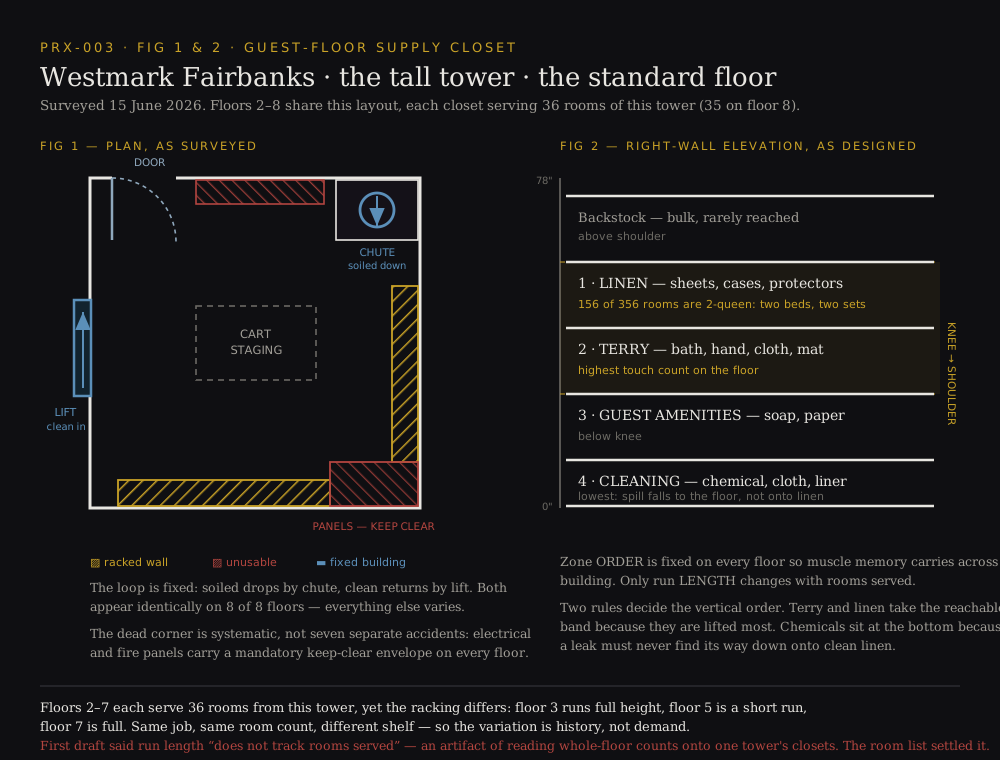
- —two figures: the closet as surveyed, and the elevation as designed
- —what seven floors share, what floor 1 does not, and why that confirms the model
- —par built off the room list — and why a status report is never a denominator
- —the transfer, as preconditions you check against your own building
Two errors are left in, and the second one is this document's own. Par on floors 2–8 had been built on 323 rooms; those floors hold 356, and 323 turned out to be the row count of one morning's status report read as an inventory. Then version 2.0 described a second property as not yet open when its register showed it trading — so 2.1 withdraws that claim, quotes the wrong sentence rather than deleting it, and stops naming any property the guide is carried to.
MDWhat does a closet look like when anyone can work from it?
PRX-003 · guide · Housekeeping · v2.0 · superseded
Housekeeping closet organization guide
The version that named the property it transfers to, and stated that property's condition wrongly. Kept so anything that cited it still resolves.
- —the survey and the par-level correction, unchanged
- —a second property described from outside its own register
MDWhat does a closet look like when anyone can work from it?
PRX-003 · guide · Housekeeping · v1.0 · superseded
Housekeeping closet organization guide
The method with no building attached. Kept so anything that cited it still resolves.
- —the shelf-by-shelf layout standard
- —par levels scaled to rooms served
- —a five-day rollout that doesn't stop operations
PDF · MDWhat does a closet look like when anyone can work from it?
PRX-004 · guide · Front desk × Housekeeping · v2.0
Arrival-wave room blocking methodology
How to clean rooms in the right ORDER on a day when a busload of guests all arrives at once. Built on one real arrival day: 285 parties, 564 guests, and 180 of them landing in a single minute at 17:45.
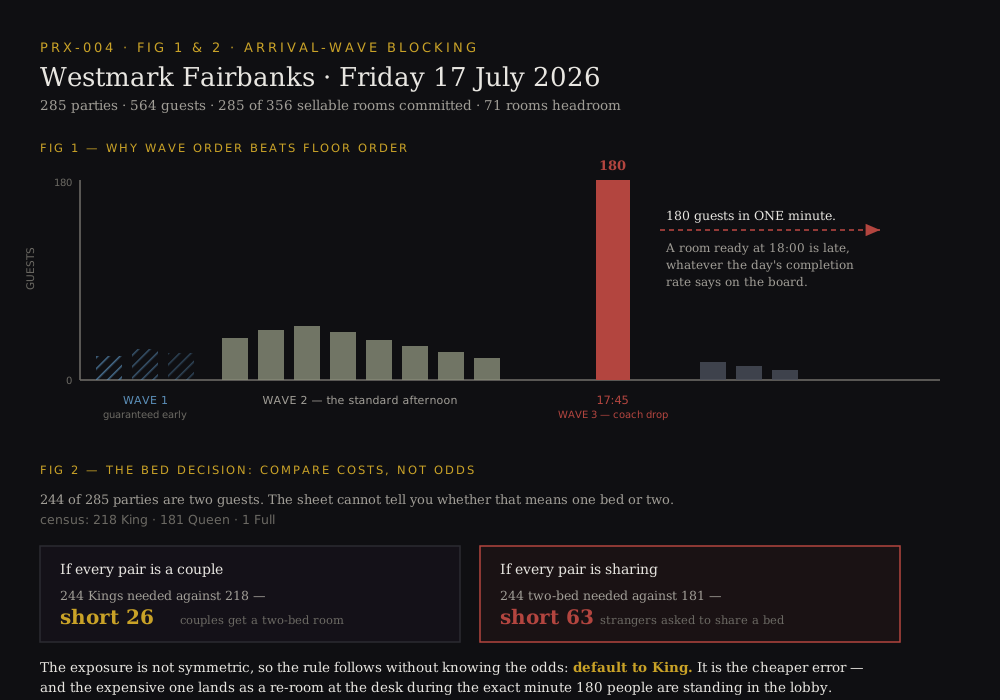
- —the arrival distribution drawn, and why wave order beats floor order
- —the bed decision: compare the cost of each error, not the odds
- —block by TYPE first, assign specific units late
- —what transfers to a property with no tour business — and what doesn't
The guide states where it has no answer. Parties of three or more are handled by hand, and on the day in question one coach appeared with a passenger count that would not join to any party detail — the sheet shows that gap rather than dropping the row, because a gap found the night before is cheap and one found at 17:45 is not.
MDHow does room readiness meet arrivals that land in waves?
PRX-004 · guide · Front desk × Housekeeping · v1.0 · superseded
Arrival-wave room blocking methodology
The waves with no arrival day attached. Kept so anything that cited it still resolves.
- —the three arrival waves and how to read them
- —block sequencing housekeeping can actually follow
- —the no-ETA workaround, step by step
PDF · MDHow does room readiness meet arrivals that land in waves?
PRX-005 · guide · Inventory · v2.0
Inventory par-level tracking template
A counting routine for supplies that keeps working after the one person who understood it quits. This version is about the denominator — the half of the formula that makes every par on every floor wrong at once when you get it wrong.
- —why 323 was a work list and 356 is the building
- —the queen-room error: a worksheet blind to 156 beds
- —a denominator per consumable — beds, occupants, arrivals, rooms cleaned
- —provenance and re-derivation, so the count survives the counter
The failure it documents was not incompetence. Someone reasonable opened a report that listed rooms, used it as an inventory, and left — and the number survived them, because a figure in a spreadsheet has no memory of where it came from. The fix is provenance on the sheet, not more care.
MDWhat is this consumable actually serving, and where is the list of those things?
PRX-005 · guide · Inventory · v1.0 · superseded
Inventory par-level tracking template
The formula with illustrative numbers and no denominator problem. Kept so anything that cited it still resolves.
- —setting pars from usage, not guesses
- —the count cadence by item class
- —handover sheets that survive turnover
PDF · MDWhat keeps a count alive after the person who kept it leaves?
PRX-006 · guide · All departments · v2.0
Daily operations flow overview
A map of a hotel's entire day — who does what, and where one department hands off to the next. Corrected against the actual shift board, which runs about eight hours later than the standard picture of a day.
- —the question the board raised: rooms occupied 8pm–2am, departures at 04:15
- —the evening turn, and the handover that is most often dropped
- —instrument the boundaries between departments, not the departments
- —the diagnostic that transfers even where the evening shift does not
The finding was not that a shift was missing. The evening room-attendant block existed and was staffed; the operating documents simply stopped at 4:30pm. A daily-flow document that contradicts its own roster is worse than none, because it trains people into a picture their building disproves.
MDWhat is the shape of a hotel's day, and does the written day match the roster?
PRX-006 · guide · All departments · v1.0 · superseded
Daily operations flow overview
A day shift described as the whole day. Kept so anything that cited it still resolves.
- —the day as one loop across departments
- —where handoffs actually happen
- —the hour bands where days are won or lost
PDF · MDWhat is the shape of a hotel's day?
PRX-007 · guide · Capital planning · v2.0
AI-assisted capital-plan sequencing
How to turn a renovation to-do list into an actual schedule. Run on a real 400-room plan, and written around the thing no methodology predicted: one floor was already finished, and it was the only measurement in the building.
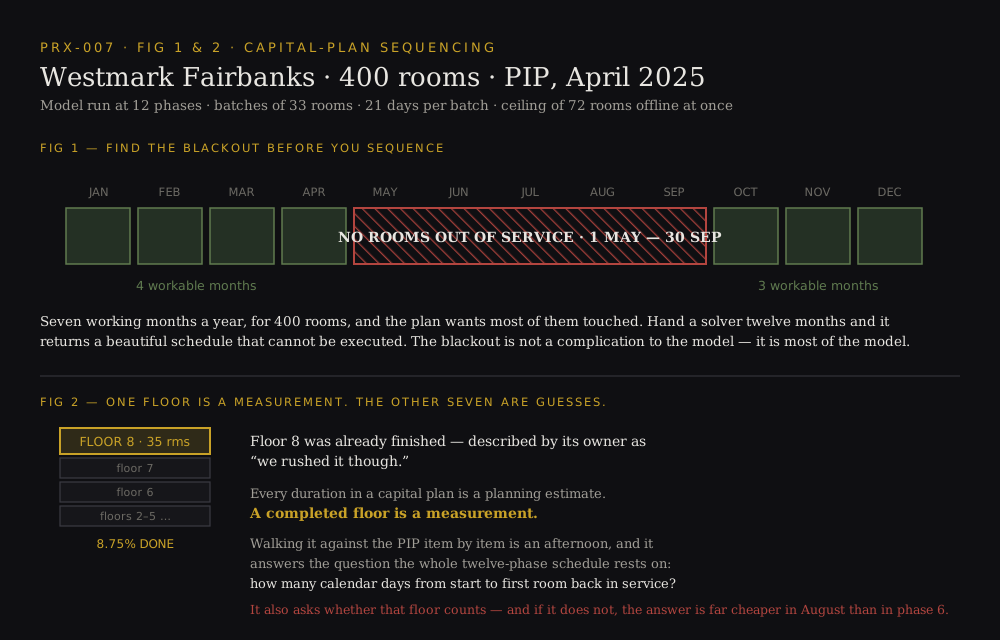
- —the blackout drawn: seven workable months a year, for 400 rooms
- —ball rollers vs long campaigns, and why one average hides both
- —batching, the offline ceiling, and why that is a business ruling not an optimisation
- —what the method cannot do — condition, cost, and a synthetic occupancy curve
The method is sound and it is not what mattered most. Every duration in a capital plan is a planning estimate; a completed floor is a measurement. The guide says to calibrate on your own finished work before trusting the model about the rest of the building — including the possibility that the finished work does not count and must be done twice.
MDWhen does each piece of a renovation happen, and what does it cost to be closed?
PRX-007 · guide · Capital planning · v1.0 · superseded
AI-assisted capital-plan sequencing
The sequencing method with no plan attached. Kept so anything that cited it still resolves.
- —turning PIP scope into phased sequence
- —what closed rooms cost in each month
- —scheduling against your own occupancy curve
PDF · MDWhen does each piece of a renovation happen, and what does it cost to be closed?
PRX-008 · instrument · Any department · v1.0
Replication dossier
A one-page form filled in every time a number gets used to make a decision — what the question was, what sources were used, and exactly how a second person could re-derive the answer.
- —seven sections from question to open edges
- —a checks list you tick only if you ran it
- —the replicate section — what a second person opens and runs
The form refuses to be finished quietly: section 4 lists the checks that were actually run, and section 7 makes you write down what the answer still doesn't settle.
PDFCould someone else reach this number without asking you anything?
PRX-009 · instrument · Purchasing · v1.0
Supply run and sourcing sheet
One page per supply run, carried to the shelf and the shop. What was short, where it was actually bought, what it truly cost — and whether the discount that was expected ever reached the receipt.
- —the run sheet: par, on hand, gap, source, unit price, line total
- —run frequency taken from the par's own cycle length, not from habit
- —claimed against actual discount, side by side, closed against the receipt
- —four questions asked before the first sheet is filed
The page closes twice before it leaves the room: each line's units times unit price must equal its total, and the totals plus tax less the discounts actually taken must equal the receipt. A discount that was expected but is not on the receipt stays on the page as a disagreement rather than being tidied away — that column is the only place a property learns which sources really pay out.
MDWhat did this run actually cost, and did the saving arrive?
PRX-010 · instrument · Purchasing · v1.0
Supply position sheet
A standing one-page picture, filled on a fixed day before the run. Three marks per line answer whether the property is stocked, whether everything short is actually on order, and where money is leaking — readable in a minute by someone who ordered none of it.
- —three marks, never a number: at par, below par, above par
- —how everything short is confirmed covered by reading one column
- —the three ways supply money leaks, one of which looks like nothing at all
- —the loop with the run sheet — where the previous price comes from
A line with no mark is an unfinished page, not a line that is fine — blank never reads as good. Every below-par mark must carry an order and a future date, because an order with no expected date is a phone call someone remembers making; and every above-par mark must carry a note, because overstock is the one leak that triggers no alarm anywhere.
MDIs everything stocked, is everything short on order, and where is money leaking?
PRX-011 · instrument · Maintenance · v1.0
Carbon-monoxide detection inspection log
A device-by-device walk, on a sheet printed from the device inventory rather than copied from last month's log. Filled standing at the device, not written up afterwards.
- —two documents, not one - the inventory and the inspection record
- —six marks, and why not-found and no-access are different findings
- —counts checked by a second hand on receipt
- —panel on-test and restore times, which cannot both be missing
Rows are pre-printed from the inventory, so a device nobody reached leaves an empty numbered line - it cannot leave nothing, which is what a hand-written list does. Times must run forward down the page and sit inside the session times, so a sheet written up afterwards has to invent a rising sequence that also fits the panel times. And the marks separate not-found from no-access: without both, an inspector who cannot enter a room must either report a device missing that is fine or write a pass they did not perform.
MDWas every device actually reached, and is the list still true?
PRX-012 · instrument · Maintenance · v1.0
Preventative maintenance log
A monthly round recorded so the rotation is visible - not only what was covered this month, but which rooms are overdue and when each was last entered.
- —the rotation and the count it rests on
- —coverage this month against what the cycle requires
- —rooms overdue, printed rather than derived
- —how preventative maintenance and a capital plan differ - defer versus replace
A log showing only this month's work cannot show the room that has fallen off the cycle, and that room is the entire reason to keep the log. The sheet carries the rotation arithmetic - keys divided by cycle months is the monthly round, and anything under it that month is debt written on the page rather than discovered a year later.
MDWhich room has nobody been inside since last year?
PRX-013 · instrument · Housekeeping · v1.0
Deep clean log
The monthly clean that a daily clean never reaches - recorded by what was reached, not by which rooms were ticked.
- —the task list - under, behind, vents, drapes, grout, edges
- —why a room-level tick cannot be audited
- —rotation, and how a slipped room shows on the page
- —what a daily clean is not expected to reach
Deep clean is invisible when done and invisible when skipped until a guest or an inspector finds it, so a tick against a room name proves nothing. Every task line must carry a state, and the same room appearing twice in a cycle with different task coverage is itself the signal.
MDWhat was actually reached, and which rooms have slipped the cycle?
PRX-014 · instrument · Reputation · v1.0
Reputation watch sheet
A monthly record of the property's own public standing, kept by the property rather than read off a vendor dashboard. Score, the scale it is out of, review count, and rank in the local market.
- —score with its scale - a 4.2 and an 8.4 are the same score
- —why averaging across channels without normalising is a category error
- —count as the leading indicator the score conceals
- —rank in market, and what it does and does not tell you
A score is a lagging average and stops moving once a property has hundreds of reviews, so the count is recorded beside it - the count moving while the score does not is information the score alone hides. A month with no new reviews is a finding, and the form does not let it look the same as a month nobody checked. There is nowhere on the sheet to write a reviewer's name.
MDWhat is our standing, and what is moving underneath a score that barely moves?
PRX-015 · instrument · Hiring · v1.0
Role requirement sheet
Written before a role is advertised and before any candidate is seen, defining what the property actually needs - so people are judged against a fixed standard rather than against each other.
- —outcomes the role must produce, not duties it performs
- —true on day one versus learnable
- —genuinely required certification versus merely conventional
- —the check column - how each requirement is verified
Every requirement must carry the method by which it will be verified. A requirement nobody can check is not a requirement, it is a preference, and the empty check column is what makes that visible. The sheet is dated before candidates are seen, because a requirement added afterwards is a requirement shaped around a person.
MDWhat must be true on day one, and how will each of those be checked?
PRX-016 · instrument · Hiring · v1.0
Role rating sheet
A single one-to-ten for how someone is doing, built the way a coach rates a player - but never written without the component scores it was made from, and weighted by role rather than shared across all of them.
- —why the scale is one to ten and nothing ever leaves it
- —weights set by role and dated before anyone is rated
- —the evidence column, and what a blank one means
- —what several periods reveal that no single review can
The overall never appears on its own. A score nobody can take apart is an opinion wearing a number, and gets defended or resented instead of used. The weighted components must sum to the overall and the weights to a hundred, so an overall written first and fitted around rarely closes. Every score carries evidence or is left blank, and the development line must address the lowest component - the form will not accept a note about a strength.
MDHow is this person doing, and what specifically moves the number?
PRX-017 · demonstration · All departments · v1.0
Worked demonstrations
The arithmetic each instrument produces, run once on invented numbers so the mechanism can be watched working. No property, no record - every figure chosen to make a calculation legible.
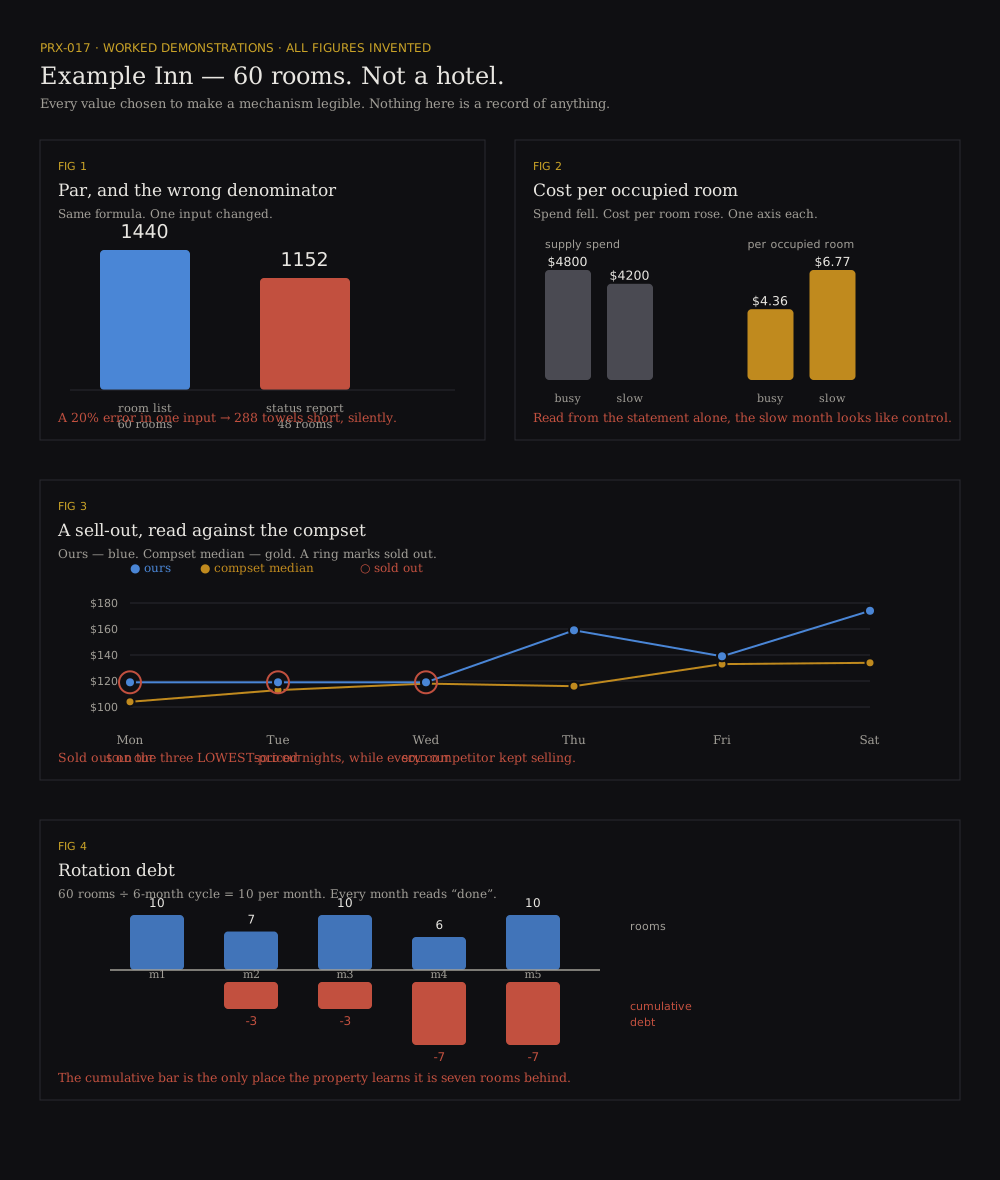
- —par, and the same par computed from the wrong denominator
- —cost per occupied room, where falling spend reads as rising cost
- —a sell-out read against the compset rather than celebrated
- —rotation debt, and the room nobody has entered in nine months
A demonstration is not evidence, and the page says so: choosing your own inputs proves only that arithmetic works. What it can show is which input each calculation depends on - and the par worked example exists to show that a twenty per cent error in one room count becomes a twenty per cent error in every par at once, in the same direction, silently.
MDWhat do these instruments actually compute, and which error is each one built to catch?
PRX-018 · instrument · All departments · v1.0
Self-supply decision sheet
One page per make-or-buy proposal, filled before any quote is sought. Six tests in order, cheapest to answer first - so a proposal that fails early never incurs the cost of testing late.
- —six tests, ordered cheapest-to-answer first
- —the two questions that hide inside one - exemption from registration is not exemption from responsibility
- —who performs it, and what a new ask has to retire
- —the failure test: invisible when right, visible when wrong
A stop is recorded rather than erased, so the same proposal returning in six months can be answered from the page instead of argued from the beginning. Every “don’t know” counts as a stop and stays visible, because the sheet refuses to let an absent answer look like a negative one - that gap is where most bad self-supply decisions are actually made. And because the tests are printed in order, a sheet with the pricing test filled in and the permission test blank shows on its face that somebody costed it before checking whether it was allowed.
MDShould we make this ourselves, and which test does the idea actually fail?
