
Volume II · The people in the record
The Commanders
An army crosses the mountains. A line bends. A campaign ends. Follow the people through the engagements that brought them into the atlas.
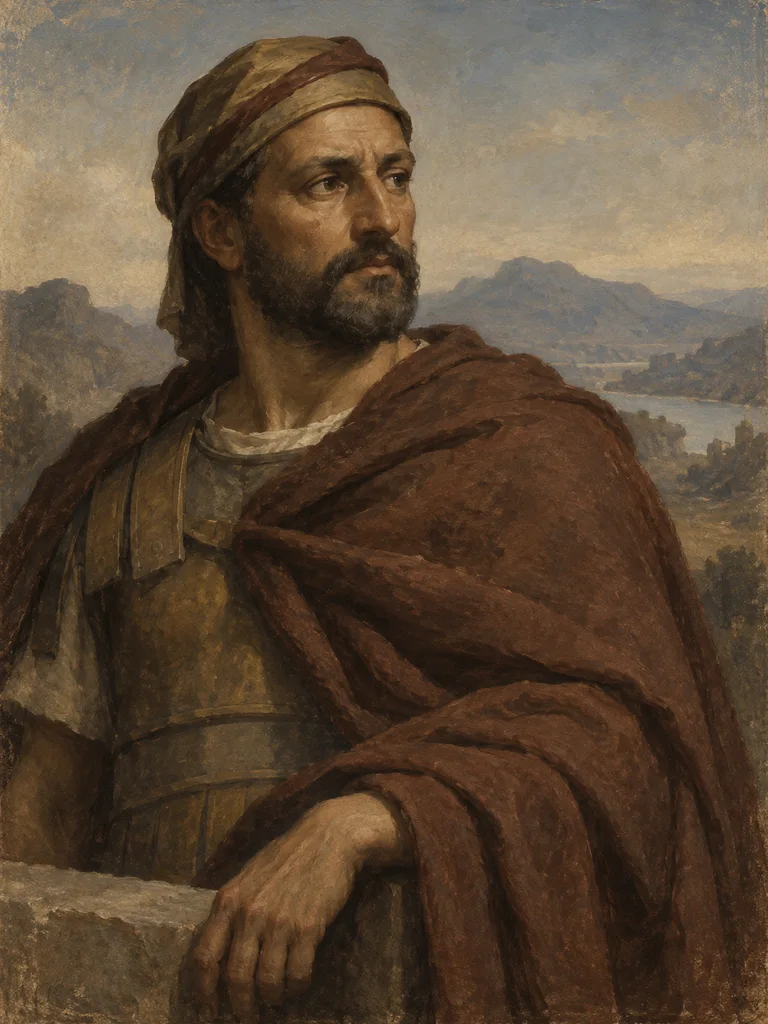
Classical Antiquity
Hannibal Barca
From the Alps to Cannae. Then what?
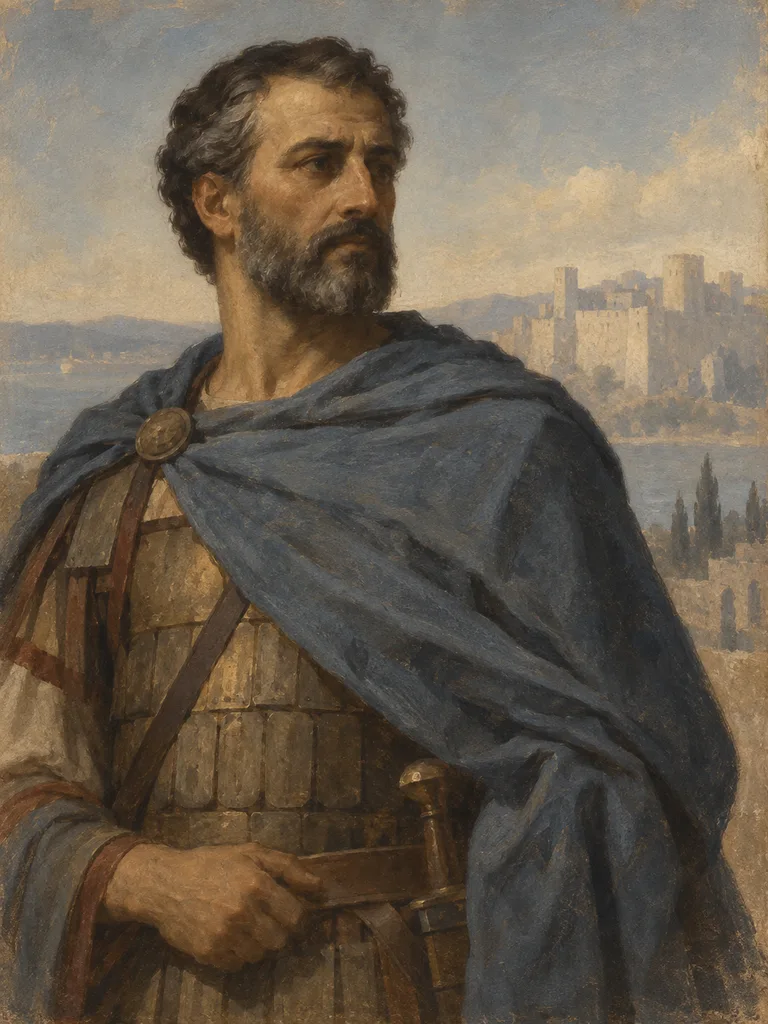
The Medieval Age of Faith
Belisarius
What can a smaller army do with the ground?
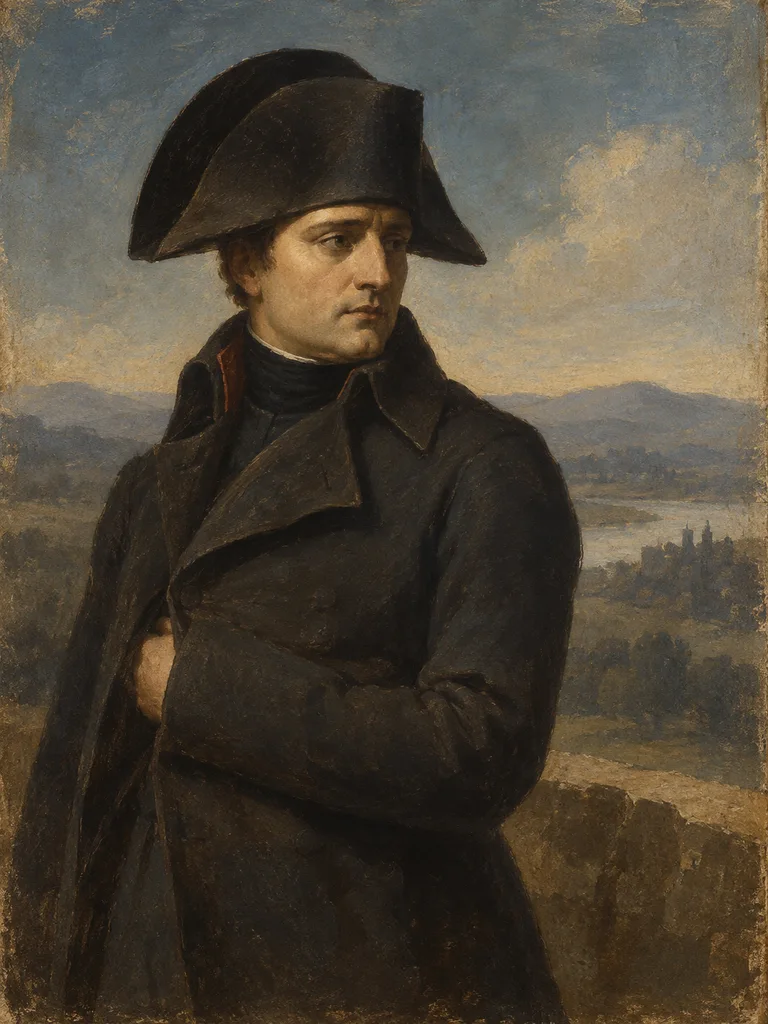
The Modern Age
Napoleon Bonaparte
Read Austerlitz. Then turn to Waterloo.
Portraits are AI-generated interpretations. Faces and costumes are imagined; the accounts come from the atlas.
The complete register
Explore the houses218 of 218 commanders · open a name to begin
The Bronze Age
Ibbi-SinKing of Ur, last of the Ur III dynasty
- 2004 BCFall of Ur (Sack of Ur, end of Ur III) — Ur III state under Ibbi-Sin: defeat
KindattuKing of Shimashki
- 2004 BCFall of Ur (Sack of Ur, end of Ur III) — Elam and Shimashki under Kindattu: victory
Thutmose IIIPharaoh and field commander · New Kingdom of Egypt
- 1457 BCBattle of Megiddo — New Kingdom Egypt: victory on the field, followed by a ~7-month siege to take the city
Muwatalli IIKing of the Hittites
- 1274 BCBattle of Kadesh — Hittite Empire (Hatti) under Muwatalli II: inflicted a near-disaster on Egypt via ambush but failed to destroy the Egyptian army; retained control of Kad…
Ramesses IIPharaoh and field commander · New Kingdom of Egypt
- 1274 BCBattle of Kadesh — New Kingdom Egypt: avoided destruction and held the field; did not capture Kadesh (indecisive)
Classical Antiquity
SennacheribKing and field commander · Neo-Assyrian Empire
- 701 BCSiege of Lachish — Neo-Assyrian Empire: captured the city by assault
CyaxaresKing of the Medes
- 612 BCFall of Nineveh — Medo-Babylonian coalition (Medes under Cyaxares, Babylonians under Nabopolassar, with allied Scythians): besieged and stormed the city; destroyed Nineveh
Sin-shar-ishkunKing of Assyria
- 612 BCFall of Nineveh — Neo-Assyrian Empire under Sin-shar-ishkun: annihilated; the capital fell and the king died in the fall of the city
Miltiades the YoungerAthenian general (strategos)
- 490 BCBattle of Marathon — Athens and Plataea: victory
ThemistoclesAthenian statesman and naval strategist
- 490 BCBattle of Marathon
- 480 BCBattle of Salamis — Greek city-states (Hellenic League): victory
Leonidas IKing of Sparta (Agiad dynasty); commander at Thermopylae
- 480 BCBattle of Thermopylae — Greek alliance (Sparta, led by Leonidas I): defeat
Xerxes IKing of Kings of the Achaemenid Empire · Achaemenid Empire (Persia)
- 480 BCBattle of Thermopylae — Achaemenid Persia (Xerxes I): victory
- 480 BCBattle of Salamis — Achaemenid Empire: defeat
EpaminondasTheban general and statesman
- 371 BCBattle of Leuctra — Thebes / Boeotian League (Epaminondas): victory
Alexander III of MacedonKing and general · Argead Dynasty (House of Macedon)
- 338 BCBattle of Chaeronea (338 BC) — Macedon (Philip II, with Alexander): victory
- 331 BCBattle of Gaugamela — Macedon: victory
- 326 BCBattle of the Hydaspes — Macedonian and allied forces of Alexander III: victory, but costly and not decisive of the campaign
Philip II of MacedonKing of Macedon; military reformer
- 338 BCBattle of Chaeronea (338 BC) — Macedon (Philip II, with Alexander): victory
PorusKing
- 326 BCBattle of the Hydaspes — Paurava kingdom under Porus (Puru): defeated and captured; restored to his throne as a satrap
AshokaEmperor
- 261 BCThe Kalinga Warvictory; Kalinga annexedThe atlas does not record this entry as a contest between commanded sides.
Bai QiGeneral of the State of Qin · Qin Dynasty
- 260 BCBattle of Changping — State of Qin: Decisive victory
Hannibal BarcaGeneral and statesman
- 218 BCHannibal's Crossing of the Alps — Carthage (Hannibal's field army): Crossing completed, but at crippling cost - arrived with only ~20,000 infantry and ~6,000 cavalry
- 216 BCBattle of Cannae — Carthage: victory
- 202 BCBattle of Zama — Carthage: defeat
Publius Cornelius Scipio AfricanusGeneral and consul
- 202 BCBattle of Zama — Roman Republic: victory
Gaius Julius CaesarGeneral, consul, dictator · Julio-Claudian dynasty
- 52 BCSiege of Alesia — Roman Republic: victory
- 48 BCBattle of Pharsalus — Caesarians (Gaius Julius Caesar): victory
Pompey the GreatRoman general and statesman; member of the First Triumvirate
- 48 BCBattle of Pharsalus — Pompeians / Optimates (Pompey the Great): defeat
ArminiusCherusci war leader
- 9Battle of the Teutoburg Forest — Germanic tribal coalition (led by Arminius of the Cherusci): decisive victory
Publius Quinctilius VarusRoman legate
- 9Battle of the Teutoburg Forest — Roman Empire (Publius Quinctilius Varus): annihilated
Cao CaoWarlord, chancellor, and de facto ruler of northern China
- 208Battle of Red Cliffs — Cao Cao (northern army): Defeat
Zhuge LiangChancellor, regent, and military strategist of Shu Han
- 208Battle of Red Cliffs — Sun-Liu southern alliance: Decisive victory
The Medieval Age of Faith
BelisariusGeneral (magister militum)
- 530Battle of Dara — Eastern Roman (Byzantine) Empire: decisive victory
- 537Siege of Rome (537-538) — Eastern Roman (Byzantine) Empire: victory
Khalid ibn al-WalidGeneral
- 633Battle of Walaja — Rashidun Caliphate: victory
- 636Battle of the Yarmouk — Rashidun Caliphate: victory
Charles MartelMayor of the Palace, military leader
- 732Battle of Tours (Battle of Poitiers) — Frankish realm (Charles Martel, with Aquitanians under Odo): victory
Basil IIEmperor and field commander
- 1014Battle of Kleidion — Byzantine Empire: decisive victory
Cnut the GreatKing and warlord · House of Gorm (Jelling Dynasty)
- 1016Battle of Assandun — Denmark: victory
William the ConquerorDuke and king · House of Normandy
- 1066Battle of Hastings — Normandy: victory
Alp ArslanSultan and commander
- 1071Battle of Manzikert — Seljuk Empire (Alp Arslan): victory
Romanos IV DiogenesByzantine Emperor
- 1071Battle of Manzikert — Byzantine Empire (Romanos IV Diogenes): decisive defeat; emperor captured
SaladinSultan and commander
- 1187Battle of Hattin — Ayyubid Sultanate (Saladin): decisive victory
Prithviraj IIIKing
- 1192Second Battle of Tarain — Chahamana (Chauhan) confederacy under Prithviraj III: destroyed; Prithviraj captured and killed
SubutaiGeneral
- 1223Battle of the Kalka River — Mongol Empire (reconnaissance-in-force): decisive victory
- 1241Battle of Mohi — Mongol Empire: victory
BaibarsSultan and commander
- 1260Battle of Ain Jalut — Mamluk Sultanate (Qutuz, with Baybars commanding the vanguard): decisive victory
The Late-Medieval Crisis
Robert the BruceKing and military leader
- 1314Battle of Bannockburn — Kingdom of Scotland (Robert the Bruce): decisive victory
TimurConqueror and ruler
- 1402Battle of Ankara — Timurid Empire (Timur / Tamerlane): decisive victory
Mehmed IISultan and commander
- 1453Fall of Constantinople — Ottoman Empire (Mehmed II): decisive victory
Vlad IIIVoivode (prince) · House of Drăculești
- 1462The Night Attack at Târgoviște — Wallachia: tactical success
Henry VIIKing of England
- 1485Battle of Bosworth Field — Tudor army under Henry Tudor, with French and Welsh contingents: decisive victory
Richard IIIKing of England
- 1485Battle of Bosworth Field — Royal army of Richard III: destroyed; the king killed on the field
The Early-Modern Age of Ambition
Hernan CortesConquistador
- 1520La Noche Triste (The Night of Sorrows) — Spanish and Tlaxcalan allies: severe defeat during forced retreat
- 1520Battle of Otumba — Spanish and Tlaxcalan allies: victory
- 1521Fall (Siege) of Tenochtitlan — Spanish and indigenous allies: decisive victory
Moctezuma IIHuey Tlatoani (emperor) · Aztec Empire (Triple Alliance)
- 1520La Noche Triste (The Night of Sorrows)
CuauhtemocHuey Tlatoani (last Aztec emperor) · Aztec Empire (Triple Alliance)
- 1521Fall (Siege) of Tenochtitlan — Aztec Triple Alliance: destruction of the city and capture of the emperor
BaburFounder and first emperor of the Mughal Empire
- 1526First Battle of Panipat — Mughal (Timurid) forces of Babur: decisive victory
AtahualpaSapa Inca (last independent emperor) · Inca Empire (Tawantinsuyu)
- 1532Battle of Cajamarca — Inca Empire: catastrophic defeat; emperor captured
Francisco PizarroConquistador, Governor of New Castile
- 1532Battle of Cajamarca — Spanish conquistadors: decisive victory
AkbarEmperor
- 1556Second Battle of Panipat — Mughal forces of Akbar, commanded by Bairam Khan: decisive victory
- 1576Battle of Haldighati
Bairam KhanRegent and commander-in-chief
- 1556Second Battle of Panipat — Mughal forces of Akbar, commanded by Bairam Khan: decisive victory
Hemachandra VikramadityaChief minister, then general, then emperor
- 1556Second Battle of Panipat — Forces of Hemu (Hemachandra Vikramaditya): destroyed; Hemu captured and beheaded
Aliya Rama RayaRegent and effective ruler
- 1565Battle of Talikota — Vijayanagara Empire: annihilated; Rama Raya captured and beheaded on the field
Maharana Pratap Singh IMaharana
- 1576Battle of Haldighati — Mewar under Maharana Pratap: withdrew; Pratap escaped wounded
Man Singh I of AmberRajput ruler and Mughal general
- 1576Battle of Haldighati — Mughal forces under Man Singh I of Amber: held the field
Yi Sun-sinAdmiral of the Joseon navy · Joseon Dynasty
- 1592Battle of Hansan Island — Joseon Korea: Decisive victory
- 1597Battle of Myeongnyang — Joseon Korea: Decisive victory
- 1598Battle of Noryang — Joseon Korea and Ming China: Decisive victory
Tokugawa IeyasuDaimyo and founding shogun
- 1600Battle of Sekigahara — Eastern Army (Tokugawa Ieyasu): decisive victory
Gustavus AdolphusKing of Sweden and commander-in-chief
- 1631Battle of Breitenfeld — Sweden and Electoral Saxony (Gustavus Adolphus; Saxons under John George I/Arnim): decisive victory
DorgonPrince Regent
- 1644Battle of Shanhai Pass — Qing (Later Jin) forces with Wu Sangui's Ming garrison: victory
Li ZichengRebel leader, then emperor
- 1644Battle of Shanhai Pass — Shun dynasty: defeated; Li Zicheng withdrew to Beijing, abandoned it, and was dead within a year
Wu SanguiGeneral; later Prince of the Pacified West, then rebel emperor
- 1644Battle of Shanhai Pass — Qing (Later Jin) forces with Wu Sangui's Ming garrison: victory
Prince Eugene of SavoyField Marshal and President of the Imperial War Council
- 1683Battle of Vienna — Holy League (Holy Roman Empire/Habsburgs + Polish-Lithuanian Commonwealth): decisive victory
- 1704Battle of Blenheim — Grand Alliance (Duke of Marlborough and Prince Eugene of Savoy): decisive victory
FiyanggūGeneral of the Western Route Army
- 1696Battle of Jao Modo — Qing Empire: victory
Galdan Boshugtu KhanKhan
- 1696Battle of Jao Modo — Dzungar Khanate: defeated; Galdan's wife Queen Anu killed, Galdan dead within a year
The Kangxi EmperorEmperor
- 1696Battle of Jao Modo — Qing Empire: victory
John Churchill, 1st Duke of MarlboroughCaptain-General of the allied armies
- 1704Battle of Blenheim — Grand Alliance (Duke of Marlborough and Prince Eugene of Savoy): decisive victory
Edward ThatchPirate commander - Queen Anne's Revenge and three consorts at P-001; sloop Adventure at P-003
- 1718Charleston Bar blockade — Thatch's squadron (Edward Thatch, alias Teach): victory
- 1718Ocracoke Inlet — Thatch's crew (Edward Thatch, alias Teach - killed): defeat
Robert JohnsonGovernor, Province of South Carolina - commander of record for side 2 at P-001
- 1718Charleston Bar blockade — Province of South Carolina (Gov. Robert Johnson): defeat
Robert MaynardLieutenant, Royal Navy - side 1 at P-003, commanding the hired sloops Jane and Ranger
- 1718Ocracoke Inlet — Royal Navy detachment (Lt. Robert Maynard, of HMS Pearl): victory
SpotswoodColonial official who mounted the Ocracoke expedition (P-003); not a belligerent commander in any admitted row
- 1718Ocracoke Inlet
Stede BonnetPirate commander - Royal James, with Fortune and Francis; side 2 at P-002, captured
- 1718Cape Fear River (Battle of the Sandbars) — Bonnet's squadron (Maj. Stede Bonnet): defeat
William RhettColonel commanding the South Carolina expedition - side 1 at P-002
- 1718Cape Fear River (Battle of the Sandbars) — South Carolina expedition (Col. William Rhett): victory
BonnyMember of Rackham's crew, covered by the printed Jamaica trial of Nov 1720; not a belligerent commander in any admitted row
- 1720Negril Point
John RackhamPirate commander - 1 sloop; side 2 at P-004, crew captured and tried
- 1720Negril Point — Rackham's crew (John Rackham): defeat
Jonathan BarnetCaptain of the Jamaica sloop - side 1 at P-004
- 1720Negril Point — Jamaica sloop (Capt. Jonathan Barnet): victory
ReadMember of Rackham's crew, covered by the printed Jamaica trial of Nov 1720; not a belligerent commander in any admitted row
- 1720Negril Point
Bartholomew RobertsPirate commander - Royal Fortune, ex-Onslow, a Royal African Company frigate of ~40 guns, with consorts; side 2 at P-006
- 1722Cape Lopez, second action — Roberts's company - Royal Fortune (Bartholomew Roberts - killed): defeat
Chaloner OgleCaptain, Royal Navy, HMS Swallow - side 1 at P-005 and P-006
- 1722Cape Lopez, first action — Royal Navy - HMS Swallow (Capt. Chaloner Ogle): victory
- 1722Cape Lopez, second action — Royal Navy - HMS Swallow (Capt. Chaloner Ogle): victory
James SkyrmePirate commander of the consort Ranger - side 2 at P-005, vessel taken
- 1722Cape Lopez, first action — Roberts's consort - Ranger (James Skyrme): defeat
Frederick the GreatKing of Prussia and field commander
- 1757Battle of Leuthen — Kingdom of Prussia (Frederick II 'the Great'): decisive victory
Mir JafarCommander, then Nawab under Company protection
- 1757Battle of Plasseydefeated; Siraj fled, was captured and executedThe atlas does not record this entry as a contest between commanded sides.
Robert CliveCompany officer and Governor of Bengal
- 1757Battle of PlasseyvictoryThe atlas does not record this entry as a contest between commanded sides.
Siraj-ud-DaulahNawab of Bengal, Bihar and Orissa
- 1757Battle of Plasseydefeated; Siraj fled, was captured and executedThe atlas does not record this entry as a contest between commanded sides.
Ahmad Shah DurraniShah and commander
- 1761Third Battle of Panipat — Durrani Afghan forces and Indian allies under Ahmad Shah Durrani: decisive victory
Sadashivrao BhauCommander-in-chief of the Maratha army
- 1761Third Battle of Panipat — Maratha confederacy: annihilated; Sadashivrao Bhau killed, his body never certainly identified
VishwasraoHeir to the Peshwa
- 1761Third Battle of Panipat — Maratha confederacy: annihilated; Sadashivrao Bhau killed, his body never certainly identified
Israel PutnamMajor General, Continental Army
- 1775Battle of Bunker Hill — American colonists: Tactical defeat; forced to withdraw after ammunition ran out
Joseph WarrenMajor General (commission unexercised); physician and political leader
- 1775Battle of Bunker Hill — American colonists: Tactical defeat; forced to withdraw after ammunition ran out
William Howe, 5th Viscount HoweGeneral; Commander-in-Chief, North America
- 1775Battle of Bunker Hill — Great Britain: Costly victory; captured the ground
William PrescottColonel, Massachusetts militia
- 1775Battle of Bunker Hill — American colonists: Tactical defeat; forced to withdraw after ammunition ran out
George WashingtonCommander-in-Chief of the Continental Army
- 1776Battle of Trenton — United States (Continental Army): Decisive victory
- 1781Siege of Yorktown — United States and France: Decisive Franco-American victory
Johann RallColonel, Hessian brigade
- 1776Battle of Trenton — Hesse-Kassel (Hessian garrison, British service): Routed; garrison largely captured
Nathanael GreeneContinental Army major general; commander of the Southern Department
- 1776Battle of Trenton — United States (Continental Army): Decisive victory
- 1781Battle of Guilford Court House — United States (Continental and militia): Withdrew from the field, but inflicted crippling losses
- 1781Battle of Eutaw Springs — United States (Continental and militia): Withdrew after early success
- 1781Battle of Hobkirk's Hill — United States (Continental and militia): Withdrew from the field
- 1781Siege of Yorktown
Bernardo de GálvezGovernor of Spanish Louisiana and commander of Spain's Gulf Coast campaign; later Viceroy of New Spain
- 1779Battle of Baton Rouge — Spain: Victory
- 1780Siege of Mobile — Spain: Victory
- 1781Siege of Pensacola — Spain (with French naval support): victory
Charles Cornwallis, 1st Marquess CornwallisLieutenant General; later Governor-General of India
- 1781Siege of Yorktown — Great Britain: Trapped and forced to surrender the army
François Joseph Paul, comte de GrasseAdmiral
- 1781Siege of Yorktown — United States and France: Decisive Franco-American victory
Jean-Baptiste Donatien de Vimeur, comte de RochambeauLieutenant General, French expeditionary force
- 1781Siege of Yorktown — United States and France: Decisive Franco-American victory
Anthony WayneMajor General commanding U.S. forces at Fallen Timbers
- 1794Battle of Fallen Timbers — United States (Legion of the United States): Decisive victory
The Modern Age
Arthur WellesleyGeneral
- 1803Battle of Assaye — British East India Company and allies under Arthur Wellesley: victory, at very heavy cost
Horatio NelsonVice-Admiral, Royal Navy
- 1805Battle of Trafalgar — Britain (Royal Navy): decisive victory; no ships lost
Napoleon BonaparteGeneral and emperor
- 1805Battle of Austerlitz — French Empire: victory
- 1815Battle of Waterloo — French (Armee du Nord, Napoleon): army destroyed
Diwan Mokham ChandGeneral
- 1813Battle of Attock — Sikh Empire: victory
Dost Mohammad KhanEmir of Afghanistan
- 1813Battle of Attock — Durrani Empire: defeated; withdrew across the Indus
Fateh Khan BarakzaiWazir of the Durrani Empire
- 1813Battle of Attock — Durrani Empire: defeated; withdrew across the Indus
Mian Ghaus KhanDarogha-i-Topkhana (director of artillery)
- 1813Battle of Attock — Sikh Empire: victory
Alexander CochraneVice Admiral
- 1814Battle of Baltimore — Great Britain: Repulsed; abandoned the attack on Baltimore
George ArmisteadMajor, U.S. Army; commander of Fort McHenry
- 1814Battle of Baltimore — United States: Victory; British assault repelled
John StrickerBrigadier General, Maryland militia
- 1814Battle of Baltimore — United States: Victory; British assault repelled
Robert RossMajor General
- 1814Battle of Baltimore — Great Britain: Repulsed; abandoned the attack on Baltimore
Samuel SmithMajor General, Maryland militia; U.S. Senator
- 1814Battle of Baltimore — United States: Victory; British assault repelled
Andrew JacksonMajor general; later 7th President of the United States
- 1815Battle of New Orleans — United States: Decisive victory
Arthur Wellesley, 1st Duke of WellingtonField Marshal and allied commander
- 1815Battle of Waterloo — Anglo-allied army (Wellington) + Prussian army (Blucher): decisive Coalition victory
José de San MartínGeneral and statesman; architect of the southern liberation campaign
- 1817Crossing of the Andes — Army of the Andes (Patriots): Successful crossing; campaign victory at Chacabuco
Kharak SinghHeir apparent, later Maharaja
- 1818Siege of Multan — Sikh Empire: victory
Misr Diwan ChandGeneral, commander of the army in the field
- 1818Siege of Multan — Sikh Empire: victory
- 1819Battle of Shopian — Sikh Empire: victory
Muzaffar KhanNawab and governor of Multan
- 1818Siege of Multan — Durrani governorate of Multan: defeated; Muzaffar Khan and several of his sons killed in the final assault
Jabbar KhanGovernor of Kashmir
- 1819Battle of Shopian — Durrani governorate of Kashmir: defeated; Jabbar Khan wounded and the valley lost
Simón BolívarRevolutionary general and statesman; supreme commander of the northern liberation campaigns
- 1819Battle of Boyacá — Patriots (Gran Colombia): Decisive victory
- 1821Battle of Carabobo — Patriots (Gran Colombia): Decisive victory
Akali Phula SinghNihang leader and irregular commander; Jathedar of the Akal Takht
- 1823Battle of Nowshera — Sikh Empire: victory
Azim Khan BarakzaiGovernor of Kashmir, then of Kabul
- 1823Battle of Nowshera — Afghan forces under Azim Khan Barakzai, with Yusufzai levies: defeated; Azim Khan withdrew toward Kabul and died within months
Hari Singh NalwaGeneral; governor of Kashmir, Hazara and Peshawar
- 1823Battle of Nowshera — Sikh Empire: victory
- 1837Battle of Jamrud — Sikh Empire: held the field
Ranjit SinghMaharaja
- 1823Battle of Nowshera — Sikh Empire: victory
Antonio José de SucreGeneral and statesman; Bolívar's chief lieutenant and victor of the decisive battle of the war
- 1824Battle of Ayacucho — Patriots (United Liberating Army): Decisive victory
Antonio López de Santa AnnaGeneral; President of Mexico (multiple terms)
- 1836Battle of the Alamo — Mexico (Centralist Army): Victory; stormed the fort
- 1836Battle of San Jacinto — Mexico (Centralist Army): Routed; army destroyed and Santa Anna captured the next day
David CrockettCongressman; volunteer at the Alamo
- 1836Battle of the Alamo — Republic of Texas (Texian and Tejano defenders): Annihilated; nearly all defenders killed
James BowieColonel, Texian volunteers; joint commander at the Alamo
- 1836Battle of the Alamo — Republic of Texas (Texian and Tejano defenders): Annihilated; nearly all defenders killed
Sam HoustonCommander-in-chief of the Texian Army; first and third President of the Republic of Texas
- 1836Battle of San Jacinto — Republic of Texas (Texian Army): Decisive victory
William Barret TravisLieutenant Colonel; joint commander at the Alamo
- 1836Battle of the Alamo — Republic of Texas (Texian and Tejano defenders): Annihilated; nearly all defenders killed
Mahan Singh MirpuriGarrison commander at Jamrud
- 1837Battle of Jamrud — Sikh Empire: held the field
Muhammad Akbar KhanSardar; son of Dost Mohammad Khan
- 1837Battle of Jamrud — Emirate of Kabul: withdrew; the fort was not taken and the army returned to Kabul
Shamsuddin KhanAfghan commander at Jamrud
- 1837Battle of Jamrud — Emirate of Kabul: withdrew; the fort was not taken and the army returned to Kabul
Charles ElliotChief Superintendent of Trade in China; plenipotentiary
- 1841Battle of the Bogue — United Kingdom and the East India Company: victory
Guan TianpeiCommander-in-Chief of Naval Forces, Guangdong
- 1841Battle of the Bogue — Qing Empire: defeated; Admiral Guan Tianpei killed at the gate of the Anunghoy fort
James BremerCommodore, commanding the naval force in China
- 1841Battle of the Bogue — United Kingdom and the East India Company: victory
HailingManchu banner commander, Chinkiang garrison
- 1842Battle of Chinkiang — Qing Empire, Manchu and Mongol bannermen: defeated; Hailing and much of the garrison died by their own hands after the walls fell
Hugh GoughCommander-in-Chief, India
- 1842Battle of Chinkiang — United Kingdom: victory
- 1845Battle of Mudki — British East India Company: victory
- 1845Battle of Ferozeshah — British East India Company: victory
- 1846Battle of Sobraon — British East India Company: victory
- 1848Battle of Ramnagar — British East India Company: withdrew from the crossing, having failed to force it
- 1849Battle of Chillianwala — British East India Company: held the field
- 1849Battle of Gujrat — British East India Company: victory
William ParkerRear-Admiral, commanding the East Indies and China Station
- 1842Battle of Chinkiang — United Kingdom: victory
Henry HardingeGovernor-General of India
- 1845Battle of Mudki — British East India Company: victory
- 1845Battle of Ferozeshah — British East India Company: victory
- 1846Battle of Sobraon — British East India Company: victory
Lal SinghWazir of Lahore and army commander
- 1845Battle of Mudki — Sikh Khalsa Army: defeated; withdrew, leaving 17 guns
- 1845Battle of Ferozeshah — Sikh Khalsa Army: defeated; the position was lost after a night in British hands under Sikh guns
Tej SinghCommander-in-Chief of the Khalsa army
- 1845Battle of Ferozeshah — Sikh Khalsa Army: defeated; the position was lost after a night in British hands under Sikh guns
- 1846Battle of Sobraon — Sikh Khalsa Army: defeated; the army destroyed against the river
Harry SmithMajor-General
- 1846Battle of Aliwal — British East India Company: victory
Ranjodh Singh MajithiaSardar and general
- 1846Battle of Aliwal — Sikh Khalsa Army: defeated; driven into the Sutlej with the loss of the guns
Sham Singh AttariwalaSardar and general
- 1846Battle of Sobraon — Sikh Khalsa Army: defeated; the army destroyed against the river
Winfield ScottGeneral; longest-serving active-duty general in U.S. history to that point
- 1847Battle of Chapultepec — United States: Victory
Sher Singh AttariwalaSardar; commander of the Sikh army in the Second Anglo-Sikh War
- 1848Battle of Ramnagar — Sikh forces under Sher Singh Attariwala: held the field
- 1849Battle of Chillianwala — Sikh forces under Sher Singh Attariwala: withdrew in good order, having taken British colours and guns
- 1849Battle of Gujrat — Sikh forces with an Afghan contingent: defeated; the army dispersed and surrendered on 12 March 1849
Chattar Singh AttariwalaSardar; governor of Hazara
- 1849Battle of Gujrat — Sikh forces with an Afghan contingent: defeated; the army dispersed and surrendered on 12 March 1849
John Coffee HaysColonel commanding the volunteer force at Second Pyramid Lake
- 1860Second Battle of Pyramid Lake — United States volunteers and Army regulars: Victory
NumagaWar leader and diplomat of the Pyramid Lake Northern Paiute · Northern Paiute (Numu)
- 1860First Battle of Pyramid Lake — Northern Paiute (with Bannock and Shoshone allies): Decisive victory
- 1860Second Battle of Pyramid Lake — Northern Paiute (with allies): Withdrawal/defeat
- 1860Pyramid Lake War (Paiute War) — Northern Paiute, Bannock, and Western Shoshone: Victory in the first battle; defeat in the second
William O. OrmsbyMajor commanding the volunteer militia at First Pyramid Lake
- 1860First Battle of Pyramid Lake — United States settler volunteers: Routed
- 1860Second Battle of Pyramid Lake — United States volunteers and Army regulars: Victory
Winnemucca (Paiute leader)Northern Paiute leader and war chief with influence over bands in the Pyramid Lake region; father of Sarah Winnemucca
- 1860Pyramid Lake War (Paiute War)
Irvin McDowellBrigadier General, Union Army
- 1861First Battle of Bull Run (First Manassas) — United States (Union): defeat
Joseph E. JohnstonGeneral, Confederate States Army
- 1861First Battle of Bull Run (First Manassas) — Confederate States: victory
P. G. T. BeauregardGeneral, Confederate States Army
- 1861Battle of Fort Sumter — Confederate States: victory
- 1861First Battle of Bull Run (First Manassas) — Confederate States: victory
- 1862Battle of Shiloh (Pittsburg Landing) — Confederate States: defeat
Robert AndersonMajor, U.S. Army; commander of Fort Sumter
- 1861Battle of Fort Sumter — United States (Union): defeat (surrendered)
Thomas J. "Stonewall" JacksonConfederate lieutenant general; corps commander, Army of Northern Virginia
- 1861First Battle of Bull Run (First Manassas) — Confederate States: victory
- 1862Battle of Antietam (Sharpsburg) — Confederate States: tactical draw / strategic defeat (withdrawal)
- 1863Battle of Chancellorsville — Confederate States: victory
Albert Sidney JohnstonGeneral, Confederate States Army
- 1862Battle of Shiloh (Pittsburg Landing) — Confederate States: defeat
Daniel Harvey HillMajor General, Confederate States Army
- 1862Battle of South Mountain — Confederate States: defeat (delaying action)
George B. McClellanUnion major general; commander, Army of the Potomac; General-in-Chief (1861-1862)
- 1862Battle of Antietam (Sharpsburg) — United States (Union): tactical draw / strategic victory
- 1862Battle of South Mountain — United States (Union): victory
Jesse L. RenoMajor General, Union Army
- 1862Battle of South Mountain — United States (Union): victory
Robert E. LeeCommander, Army of Northern Virginia; General-in-Chief of Confederate forces (1865)
- 1862Battle of Antietam (Sharpsburg) — Confederate States: tactical draw / strategic defeat (withdrawal)
- 1862Battle of South Mountain — Confederate States: defeat (delaying action)
- 1863Battle of Gettysburg — Confederate States: Defeat
- 1863Battle of Chancellorsville — Confederate States: victory
- 1865Appomattox Campaign — Confederate States: defeat (surrendered)
Ulysses S. GrantGeneral-in-Chief of the U.S. Army; later 18th U.S. President
- 1862Battle of Shiloh (Pittsburg Landing) — United States (Union): victory
- 1863Siege of Vicksburg — United States (Union): victory
- 1865Appomattox Campaign — United States (Union): victory
William Tecumseh ShermanUnion general; commander of the Military Division of the Mississippi
- 1862Battle of Shiloh (Pittsburg Landing) — United States (Union): victory
- 1863Siege of Vicksburg — United States (Union): victory
John C. PembertonLieutenant General, Confederate States Army
- 1863Siege of Vicksburg — Confederate States: defeat (surrendered)
Joseph HookerMajor General, Union Army
- 1863Battle of Chancellorsville — United States (Union): defeat
Hong XiuquanHeavenly King
- 1864Third Battle of Nanjing — Taiping Heavenly Kingdom: defeated; the city stormed, Li Xiucheng captured and executed. Hong Xiuquan had died on 1 June, before the fal…
Li XiuchengThe Loyal King; commander of Taiping forces
- 1864Third Battle of Nanjing — Taiping Heavenly Kingdom: defeated; the city stormed, Li Xiucheng captured and executed. Hong Xiuquan had died on 1 June, before the fal…
Zeng GuofanFounder and commander of the Xiang Army; Viceroy
- 1864Third Battle of Nanjing — Qing Empire — the Xiang Army: victory
Zeng GuoquanGeneral of the Xiang Army
- 1864Third Battle of Nanjing — Qing Empire — the Xiang Army: victory
Philip SheridanMajor General, Union Army
- 1865Appomattox Campaign — United States (Union): victory
Chief SietoLeader
- 1867Battle of Infernal Caverns — Shoshone, Northern Paiute and Pit River warriors: about 15 killed; survivors abandoned the caverns and slipped away on the third day
George CrookBrigadier General commanding a column at the Rosebud
- 1867Battle of Infernal Caverns — United States Army: captured the fortified position on the second day at heavy cost; 8 soldiers killed and 12 wounded
- 1876Battle of the Rosebud — United States Army: Checked; withdrew
Crazy HorseOglala Lakota war leader · Lakota (Tetuwan Sioux)
- 1876Battle of the Rosebud — Lakota and Northern Cheyenne: Tactical success / forced enemy withdrawal
- 1876Battle of the Little Bighorn — Lakota, Northern Cheyenne, and Arapaho: Decisive victory
George Armstrong CusterLieutenant Colonel commanding the 7th Cavalry at Little Bighorn
- 1876Battle of the Little Bighorn — United States Army (7th Cavalry): Custer's detachment annihilated
Sitting BullHunkpapa Lakota holy man and political leader · Lakota (Tetuwan Sioux)
- 1876Battle of the Little Bighorn — Lakota, Northern Cheyenne, and Arapaho: Decisive victory
Sarah WinnemuccaNorthern Paiute author, lecturer and advocate; U.S. Army scout and interpreter during the Bannock War
- 1878Bannock War — United States Army: Victory
James W. ForsythColonel commanding the 7th Cavalry at Wounded Knee
- 1890Wounded Knee MassacreKilled most of the encamped bandThe atlas does not record this entry as a contest between commanded sides.
Spotted Elk (Si Tanka)Miniconjou Lakota leader
- 1890Wounded Knee MassacreMassacredThe atlas does not record this entry as a contest between commanded sides.
Deng ShichangCaptain of the cruiser Zhiyuan
- 1894Battle of the Yalu River — Qing Empire — the Beiyang Fleet: defeated; five ships lost, the fleet withdrew to Weihaiwei and never fought at sea again
Ding RuchangAdmiral commanding the Beiyang Fleet
- 1894Battle of the Yalu River — Qing Empire — the Beiyang Fleet: defeated; five ships lost, the fleet withdrew to Weihaiwei and never fought at sea again
Itō SukeyukiVice-Admiral commanding the Combined Fleet
- 1894Battle of the Yalu River — Empire of Japan — the Combined Fleet: victory
Tsuboi KōzōRear-Admiral commanding the Flying Squadron
- 1894Battle of the Yalu River — Empire of Japan — the Combined Fleet: victory
Menelik IIEmperor (Negusa Nagast) of Ethiopia · Ethiopian Empire
- 1896Battle of Adwa — Ethiopian Empire: decisive victory
George DeweyAdmiral of the Navy (the only person ever to hold that rank)
- 1898Battle of Manila Bay — United States: Decisive victory
Alexander SamsonovRussian general
- 1914Battle of Tannenberg — Russia (2nd Army under Samsonov): Catastrophic defeat; army largely destroyed, Samsonov died (reportedly by suicide)
Franz Conrad von HötzendorfChief of the General Staff of the Austro-Hungarian Army (1906-1911, 1912-1917)
- 1915The White War (Alpine Front) — Austria-Hungary (Kaiserjäger and mountain troops): stalemate / localized actions
- 1915Battles of the Isonzo
- 1917Battle of Caporetto (Twelfth Battle of the Isonzo) — Central Powers (Austria-Hungary and German Empire): decisive victory
Luigi CadornaChief of Staff of the Royal Italian Army (1914-1917)
- 1915Battles of the Isonzo — Kingdom of Italy: minor gains at enormous cost; eleventh battle ended in exhaustion, twelfth (Caporetto) in defeat
- 1915The White War (Alpine Front) — Kingdom of Italy (Alpini): stalemate / localized actions
- 1917Battle of Caporetto (Twelfth Battle of the Isonzo) — Kingdom of Italy: decisive defeat / rout
Svetozar Boroević von BojnaField Marshal; commander of Austro-Hungarian forces on the Isonzo
- 1915Battles of the Isonzo — Austria-Hungary: largely successful defense
- 1917Battle of Caporetto (Twelfth Battle of the Isonzo) — Central Powers (Austria-Hungary and German Empire): decisive victory
- 1918Battle of Vittorio Veneto — Austria-Hungary: decisive defeat / collapse
Armando DiazChief of Staff of the Royal Italian Army (1917-1919)
- 1918Battle of Vittorio Veneto — Kingdom of Italy (with British, French and US contingents): decisive victory
Erich von MansteinField Marshal (Generalfeldmarschall), German Army
- 1940Battle of Sedan (1940) — Germany (XIX Panzer Corps under Guderian, Army Group A): Decisive victory; Meuse crossed and bridgehead broken open
- 1942Battle of Stalingrad — Axis (Germany and allies): Decisive defeat
- 1943Battle of Kursk — Nazi Germany (Wehrmacht, Operation Citadel): offensive failed; strategic initiative lost
Heinz GuderianColonel General (Generaloberst); Inspector-General of Armored Troops; Chief of the Army General Staff (1944-45)
- 1940Battle of Sedan (1940) — Germany (XIX Panzer Corps under Guderian, Army Group A): Decisive victory; Meuse crossed and bridgehead broken open
- 1943Battle of Kursk — Nazi Germany (Wehrmacht, Operation Citadel): offensive failed; strategic initiative lost
Chester W. NimitzFleet Admiral; Commander-in-Chief, U.S. Pacific Fleet and Pacific Ocean Areas
- 1942Battle of Midway — United States: Decisive victory
Georgy ZhukovMarshal of the Soviet Union; Deputy Supreme Commander-in-Chief
- 1942Battle of Stalingrad — Soviet Union: Decisive victory
- 1943Battle of Kursk — Soviet Union (Red Army; Central, Voronezh and Steppe Fronts): decisive strategic victory
Isoroku YamamotoMarshal Admiral; Commander-in-Chief of the Combined Fleet
- 1942Battle of Midway — Empire of Japan: Decisive defeat
- 1942Guadalcanal Campaign — Empire of Japan: defeat and evacuation
William F. Halsey Jr.Fleet Admiral; Commander South Pacific Area and U.S. Third Fleet
- 1942Guadalcanal Campaign — Allies (United States, Australia, New Zealand): decisive victory
- 1944Battle of Leyte Gulf — Allies (United States, Australia): decisive victory
Bernard MontgomeryField Marshal, British Army; commander of the Eighth Army and 21st Army Group
- 1944Normandy Landings (D-Day) — Allies (United States, United Kingdom, Canada and other Allied forces): Decisive victory; all five beachheads established and later linked
Douglas MacArthurGeneral of the Army; Supreme Commander Allied Powers; UN Command (Korea)
- 1944Battle of Leyte Gulf — Allies (United States, Australia): decisive victory
- 1950Battle of Inchon — United Nations Command (US-led, X Corps; commander douglas-macarthur): Decisive victory; Incheon seized, Seoul retaken shortly after
George S. PattonGeneral, U.S. Army; commander of the U.S. Third Army
- 1944Normandy Landings (D-Day) — Allies (United States, United Kingdom, Canada and other Allied forces): Decisive victory; all five beachheads established and later linked
Kotoku SatoLieutenant General, commanding 31st Division
- 1944The Battle of Kohima — Imperial Japanese Army 31st Division, with elements of the Indian National Army: defeated; the division withdrew without orders, having largely starved
Raymond A. SpruanceAdmiral; Commander U.S. Fifth Fleet
- 1945Battle of Iwo Jima — United States: victory at severe cost
- 1945Battle of Okinawa — Allies (United States, United Kingdom): victory at heavy cost
Tadamichi KuribayashiGeneral; commander of the Iwo Jima garrison (109th Division)
- 1945Battle of Iwo Jima — Empire of Japan: annihilation of the garrison; tactically inflicted disproportionate losses
Edward AlmondMajor General, U.S. Army; commander of X Corps
- 1950Battle of Chosin Reservoir — United States / United Nations Command: successful fighting withdrawal / breakout to Hungnam
Oliver P. SmithMajor General, U.S. Marine Corps
- 1950Battle of Chosin Reservoir — United States / United Nations Command: successful fighting withdrawal / breakout to Hungnam
Song ShilunGeneral, People's Volunteer Army; commander of the 9th Army Group
- 1950Battle of Chosin Reservoir — People's Republic of China (People's Volunteer Army): captured the field but suffered crippling losses and failed to destroy the UN force
Vo Nguyen GiapGeneral; Commander-in-Chief of the People's Army of Vietnam
- 1954Battle of Dien Bien Phu — Viet Minh (Democratic Republic of Vietnam): Decisive victory; garrison overrun and forced to surrender
- 1968Tet Offensive — North Vietnam (PAVN) and Viet Cong (NLF): military defeat; the Viet Cong was severely degraded
- 1968Battle of Khe Sanh — North Vietnam (PAVN): withdrew; failed to overrun the base
Chu Huy MânGeneral, People's Army of Vietnam
- 1965Battle of Ia Drang — North Vietnam (People's Army of Vietnam): heavy PAVN losses; both sides claimed success
Harold G. MooreLieutenant Colonel (later Lieutenant General), U.S. Army
- 1965Battle of Ia Drang — United States: US tactical success at LZ X-Ray; costly ambush at LZ Albany
Nguyễn Hữu AnSenior officer, People's Army of Vietnam
- 1965Battle of Ia Drang — North Vietnam (People's Army of Vietnam): heavy PAVN losses; both sides claimed success
Creighton AbramsGeneral; Commander, MACV (from 1968)
- 1968Tet Offensive — United States and South Vietnam (ARVN) / allies: battlefield victory; strategic/political shock
David E. LowndsColonel, U.S. Marine Corps; commander, 26th Marines
- 1968Battle of Khe Sanh — United States and South Vietnam: base held; siege lifted by Operation Pegasus
Ngô Quang TrưởngGeneral, Army of the Republic of Vietnam
- 1968Battle of Hue — United States and South Vietnam (ARVN): recaptured the city after weeks of house-to-house fighting
Stanley S. HughesColonel, U.S. Marine Corps
- 1968Battle of Hue — United States and South Vietnam (ARVN): recaptured the city after weeks of house-to-house fighting
Trần Văn QuangGeneral, People's Army of Vietnam
- 1968Battle of Hue — North Vietnam (PAVN) and Viet Cong: driven out of the city with heavy losses
Văn Tiến DũngGeneral; Chief of the General Staff, People's Army of Vietnam
- 1968Tet Offensive — North Vietnam (PAVN) and Viet Cong (NLF): military defeat; the Viet Cong was severely degraded
William WestmorelandGeneral; Commander, MACV
- 1968Tet Offensive — United States and South Vietnam (ARVN) / allies: battlefield victory; strategic/political shock
- 1968Battle of Khe Sanh — United States and South Vietnam: base held; siege lifted by Operation Pegasus
Colin PowellGeneral; Chairman of the Joint Chiefs of Staff
- 1991Operation Desert Storm (Gulf War Air and Ground Campaign) — Coalition (United States and allies): decisive coalition victory
Norman Schwarzkopf Jr.General, U.S. Army; Commander-in-Chief, U.S. Central Command
- 1991Battle of 73 Easting — United States (2nd Armored Cavalry Regiment, VII Corps; theater commander norman-schwarzkopf): Decisive one-sided victory
- 1991Operation Desert Storm (Gulf War Air and Ground Campaign) — Coalition (United States and allies): decisive coalition victory
Saddam HusseinPresident of Iraq; Commander-in-Chief
- 1991Operation Desert Storm (Gulf War Air and Ground Campaign) — Iraq: routed; expelled from Kuwait
6 entries are set in a second form. The book's usual line names a side and reports how the day went for it, which assumes two armed parties. Where that was not the case, the entry is written as an event instead.
About this reading · from register to portraits
This volume began as a gathered list of names and battle entries. That register remains above. Individual pages now let you follow each account through its setting, outcome, and the atlas's explanation.
The earlier introduction read: “Volume II — 218 names, each carried here by the battles that record them. Nothing on this page was written about a commander; every line is a battle's own entry, gathered.”
These pages are a route into the existing records, not complete biographies. Read about the atlas's sources.