Dylanvir
Atlas

Volume II · The Early-Modern Age of Ambition

Yi Sun-sin

Admiral of the Joseon navy

Joseon Dynasty ↗
3 engagements in this atlasRecorded here: 1592 — 1598

A reading of the engagements that name Yi Sun-sin. These records trace part of a life, not a complete biography.

Begin the account ↓
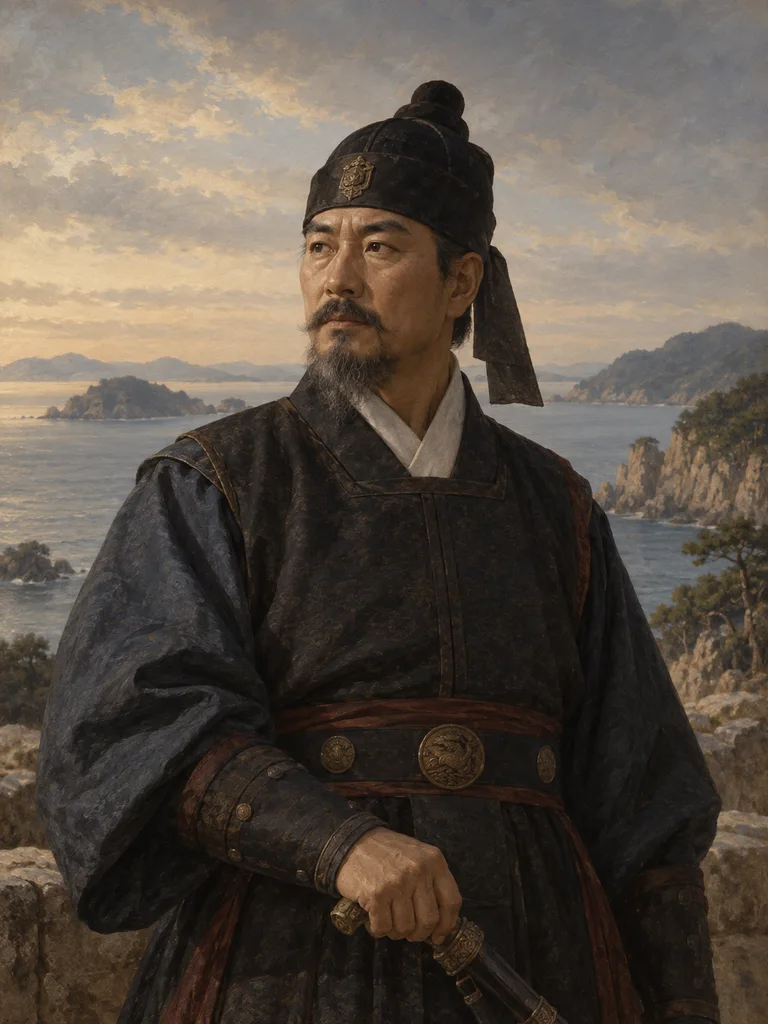
Imagined painted interpretation of Yi Sun-sin.
Created for Dylanvir LLC using Codex image generation from our original prompts. AI-generated interpretation. Face and costume are imagined.

Follow one chapter at a time, or open the whole account.

1592

Battle of Hansan Island

The setting
Open water off Hansan Island, near the Gyeonnaeryang strait, southern coast of Korea

Open sea off Hansan Island, into which the Japanese were drawn out of the cramped Gyeonnaeryang strait

Reveal the outcome

Recorded sideJoseon Korea

Recorded resultDecisive victory

Decisive Korean victory; roughly 59 of about 73 Japanese ships were destroyed or captured, breaking Japanese naval power in 1592.

How the atlas explains it

Yi sent a small decoy squadron to feign retreat and draw the Japanese out of the cramped Gyeonnaeryang strait - where their numbers and the shallows worked against a clean fight - into open water off Hansan Island. There his main fleet unfolded into the crane wing formation (hagik-jin), a U-shaped line that enveloped the Japanese on three sides while the panokseon and turtle ships massed cannon fire from the wings. It was a naval double-envelopment built to concentrate gunfire rather than rely on the boarding actions the Japanese preferred.

What followed

Destroyed or captured about 59 of roughly 73 Japanese ships and broke Japanese naval power in 1592, wrecking Hideyoshi's plan to supply his advancing armies by sea toward the Korean capital and forcing the invasion to depend on stretched overland logistics - a strategic turning point of the first invasion. Unlike Myeongnyang five years later, turtle ships were present and in action here.

Full engagement entry, figures and caveats ↗

1597

Battle of Myeongnyang

The setting
Myeongnyang Strait (Uldolmok), off the southwest coast of Korea

Narrow strait with fast, reversing tidal currents

Reveal the outcome

Recorded sideJoseon Korea

Recorded resultDecisive victory

Decisive Korean victory; roughly 31 Japanese warships were destroyed and the Japanese advance up the coast was halted.

How the atlas explains it

Yi Sun-sin funneled the vastly larger Japanese fleet into the narrow Uldolmok strait, where powerful tidal currents and the bottleneck negated their numbers and let his few heavy gun-armed ships fight on favorable terms.

What followed

One of history's most lopsided naval victories; it shattered Japanese naval momentum during the second invasion and is a foundational episode of Korean military legend. Note: no turtle ships were present, contrary to popular belief.

Full engagement entry, figures and caveats ↗

1598

Battle of Noryang

The setting
Noryang Strait, between Namhae Island and the Korean mainland, southern coast of Korea

A narrow coastal strait used as a choke point to trap a withdrawing fleet

Reveal the outcome

Recorded sideJoseon Korea and Ming China

Recorded resultDecisive victory

Decisive allied victory; roughly half the Japanese fleet was destroyed or crippled as it tried to withdraw, ending the Imjin War. Yi Sun-sin was killed by a gunshot at the moment of victory.

How the atlas explains it

With Hideyoshi dead, the Japanese army was evacuating Korea. Yi and the Ming admiral Chen Lin ambushed the withdrawing fleet in the Noryang Strait at night, catching it packed and unready and destroying much of it before it could reach open sea.

What followed

The last major battle of the Imjin War and the end of the Japanese invasions of Korea. Yi Sun-sin was shot during the pursuit and, to keep the fleet from faltering, ordered that his death be concealed until the battle was won - 'Do not announce my death.'

Full engagement entry, figures and caveats ↗

The text gathers this atlas's public engagement records. Explanations and uncertainties belong to those records; an outcome here does not grade a life. About the sources ↗