Dylanvir
Atlas

Volume II · Classical Antiquity

Alexander III of Macedon

King and general

Argead Dynasty (House of Macedon) ↗
3 engagements in this atlasRecorded here: 338 BC — 326 BC

A reading of the engagements that name Alexander III of Macedon. These records trace part of a life, not a complete biography.

Begin the account ↓
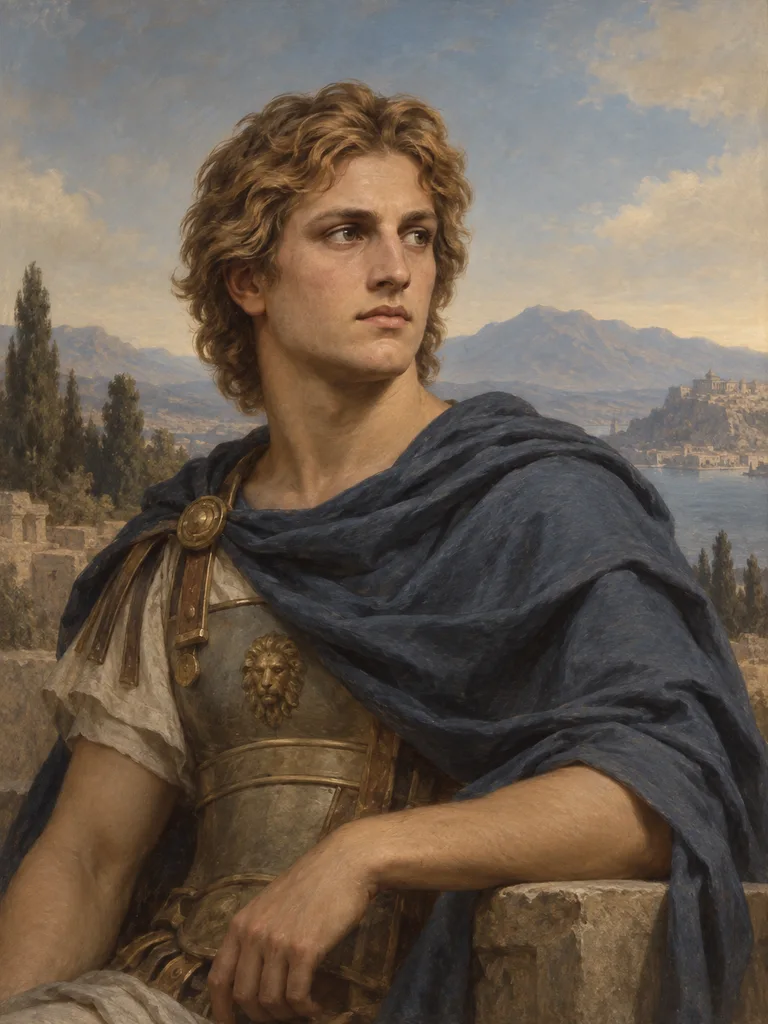
Imagined painted interpretation of Alexander III of Macedon.
Created for Dylanvir LLC using Codex image generation from our original prompts. AI-generated interpretation. Face and costume are imagined.

Follow one chapter at a time, or open the whole account.

338 BC

Battle of Chaeronea (338 BC)

The setting
Near Chaeronea, Boeotia, Greece

Plain in the valley of the Cephissus river, flanked by high ground and a stream, where the allied Greeks blocked Philip's route south.

Reveal the outcome

Recorded sideMacedon (Philip II, with Alexander)

Recorded resultvictory

Decisive Macedonian victory establishing hegemony over Greece

How the atlas explains it

Philip's combined-arms army (the long-sarissa phalanx plus heavy cavalry) outreached and outmaneuvered the allied hoplites. By engaging and then drawing back his right, he tempted the Athenians to advance and open a gap in the allied line; the wing under Alexander exploited the gap, broke through, and annihilated the Theban Sacred Band, after which the allied army collapsed.

What followed

Established Macedonian hegemony over Greece and led to the League of Corinth, setting the stage for Alexander's invasion of Persia; it ended the era of the independent Greek city-states as great military powers.

Full engagement entry, figures and caveats ↗

331 BC

Battle of Gaugamela

The setting
Gaugamela, near modern Mosul (Iraq)

Flat plain chosen by Darius to favor chariots and cavalry

Reveal the outcome

Recorded sideMacedon

Recorded resultvictory

Decisive Macedonian victory; collapse of the Persian Empire

How the atlas explains it

Heavily outnumbered, Alexander advanced obliquely to the right, dragging the Persian line sideways until a gap opened. He led the Companion cavalry in a wedge straight at Darius, who fled — and the leaderless army disintegrated.

What followed

Ended Achaemenid Persia as a great power and handed Alexander the heart of the empire.

Full engagement entry, figures and caveats ↗

326 BC

Battle of the Hydaspes

The setting
East bank of the Hydaspes (Jhelum) river, Punjab, in modern Pakistan

River line swollen by monsoon rain, with a sandy island and wooded bend upstream that screened a night crossing; beyond it flat ground that turned soft under rain, hampering chariots and bowmen.

Reveal the outcome

Recorded sideMacedonian and allied forces of Alexander III

Recorded resultvictory, but costly and not decisive of the campaign

Macedonian victory. Porus was wounded, captured, and reinstated as a subordinate ruler.

How the atlas explains it

Alexander refused the obvious crossing. He held the army opposite Porus with noisy feints night after night until the watching Paurava force stopped reacting, then crossed upstream in a storm with a picked force. Porus had to fight facing the wrong way with his elephants and chariots on ground the monsoon had turned soft, and the chariots bogged. The elephants, once wounded and driven back, did as much damage to their own infantry as to the phalanx.

What followed

Alexander's last great battle, and the point at which his army refused to go further east. It is also the clearest early case in the atlas of a defeated commander known almost entirely through the account of the people who beat him.

Full engagement entry, figures and caveats ↗

The text gathers this atlas's public engagement records. Explanations and uncertainties belong to those records; an outcome here does not grade a life. About the sources ↗