
Volume III · The Houses
Tang dynasty
China; founded by Li Yuan (Emperor Gaozu) of the Li family in 618 after the collapse of the Sui.
This entry has no dated engagement span in the atlas yet.
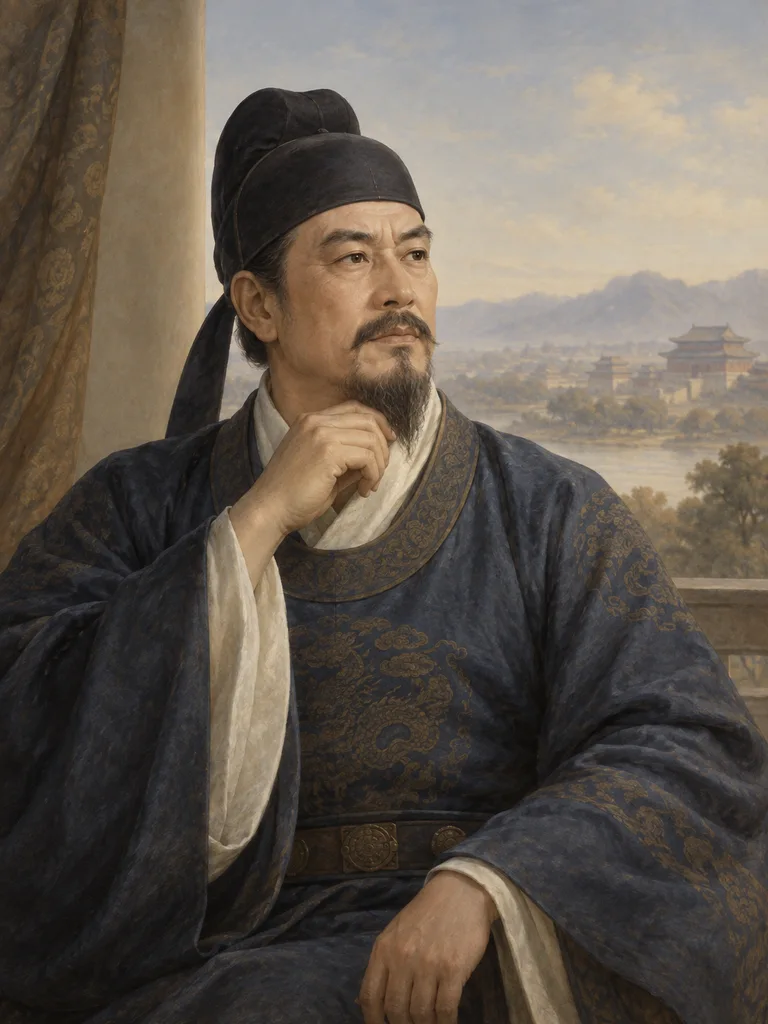
Created for Dylanvir LLC using Codex image generation from our original prompts.
AI-generated interpretation: face, clothing, and setting are imagined.
Follow one chapter at a time, or open the whole account.
01How it began
China; founded by Li Yuan (Emperor Gaozu) of the Li family in 618 after the collapse of the Sui.
02At its height
7th-8th centuries under Taizong and Xuanzong; a cosmopolitan golden age of poetry, trade along the Silk Road, and military reach into Central Asia.
Territory in the record
China proper plus protectorates extending into Central Asia, the Tarim Basin, and parts of Korea and Vietnam.
03What became of it
Severely weakened by the An Lushan Rebellion (755-763); fragmented and fell in 907, leading to the Five Dynasties and Ten Kingdoms period.
04What remained
A high point of Chinese civilization in poetry (Li Bai, Du Fu), Buddhism, the expanded civil-service examination system, and law codes copied across East Asia.
Made for Dylanvir LLC · about these images
The painted portraits and landscapes were created here with Codex image generation from our original prompts, written for this collection. They are original generated illustrations, not photographs or reproductions of archival portraits.
Each house portrait accompanies a person already named in its account. Faces, clothing, and settings are imagined; a realistic painting does not establish a historical likeness. Entries without a named figure keep their text without an invented representative.
The flags and heraldic drawings are original illustrations for Dylanvir LLC, drawn with Codex after their linked historical references. The designs themselves belong to their historical or living traditions. Captions distinguish flags, coats of arms, parts of arms, and badges, and identify the period and use shown.
This reading keeps the wording of the atlas's public house entry. The people named here are those in this entry, not a complete family tree. About the sources ↗