
Volume III · The Houses
Achaemenid Empire (Persia)
Founded by Cyrus the Great around 550 BC from the Persian heartland of Fars (Parsa) in southwestern Iran, after the Persians overthrew their Median overlords.
Engagements recorded here: 480 BC. This is a span of records, not the lifetime of this house.
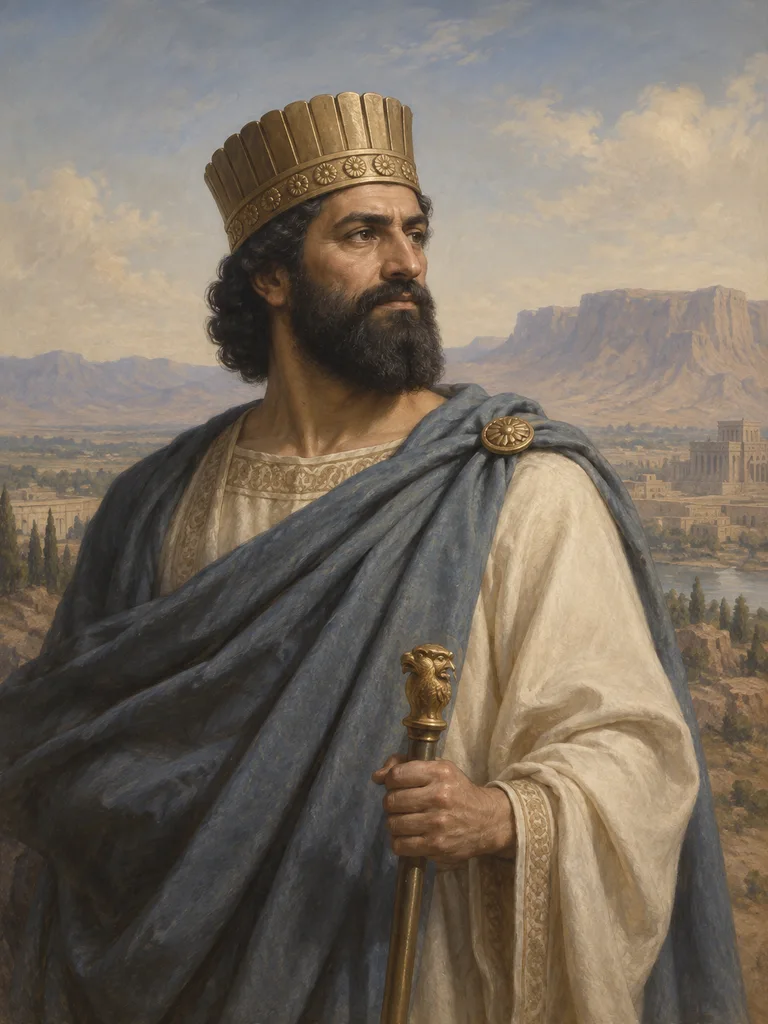
Created for Dylanvir LLC using Codex image generation from our original prompts.
AI-generated interpretation: face, clothing, and setting are imagined.
Follow one chapter at a time, or open the whole account.
01The people in the record
02At its height
Late 6th to early 5th century BC under Darius I and Xerxes I: the first empire to span three continents, stretching from the Indus valley and Central Asia to Egypt, Anatolia, and the fringe of Greece, ruling perhaps 40 percent of the world's population.
Territory in the record
Iran, Mesopotamia, the Levant, Egypt, Anatolia, Armenia, the Caucasus, Central Asia, and the Indus valley.
03What became of it
Broken by Alexander of Macedon in a single decade: defeated at Issus (333 BC) and decisively at Gaugamela (331 BC); Persepolis was burned and the last king, Darius III, was murdered by his own satrap in 330 BC.
04What remained
The template for the multiethnic world empire. Its satrapy system, imperial road network, standardized coinage, and policy of local tolerance were inherited by Alexander, the Seleucids, and Rome. Persian identity and imperial ambition revived under the Parthians and, most fully, the Sasanians (224-651 AD), who consciously cast themselves as heirs of the Achaemenids and fought Rome and Byzantium to a standstill for four centuries.
Made for Dylanvir LLC · about these images
The painted portraits and landscapes were created here with Codex image generation from our original prompts, written for this collection. They are original generated illustrations, not photographs or reproductions of archival portraits.
Each house portrait accompanies a person already named in its account. Faces, clothing, and settings are imagined; a realistic painting does not establish a historical likeness. Entries without a named figure keep their text without an invented representative.
The flags and heraldic drawings are original illustrations for Dylanvir LLC, drawn with Codex after their linked historical references. The designs themselves belong to their historical or living traditions. Captions distinguish flags, coats of arms, parts of arms, and badges, and identify the period and use shown.
This reading keeps the wording of the atlas's public house entry. The people named here are those in this entry, not a complete family tree. About the sources ↗