
Volume III · The Houses
House of Tudor
England and Wales; of Welsh origin, taking the throne when Henry Tudor defeated Richard III at Bosworth in 1485.
This entry has no dated engagement span in the atlas yet.
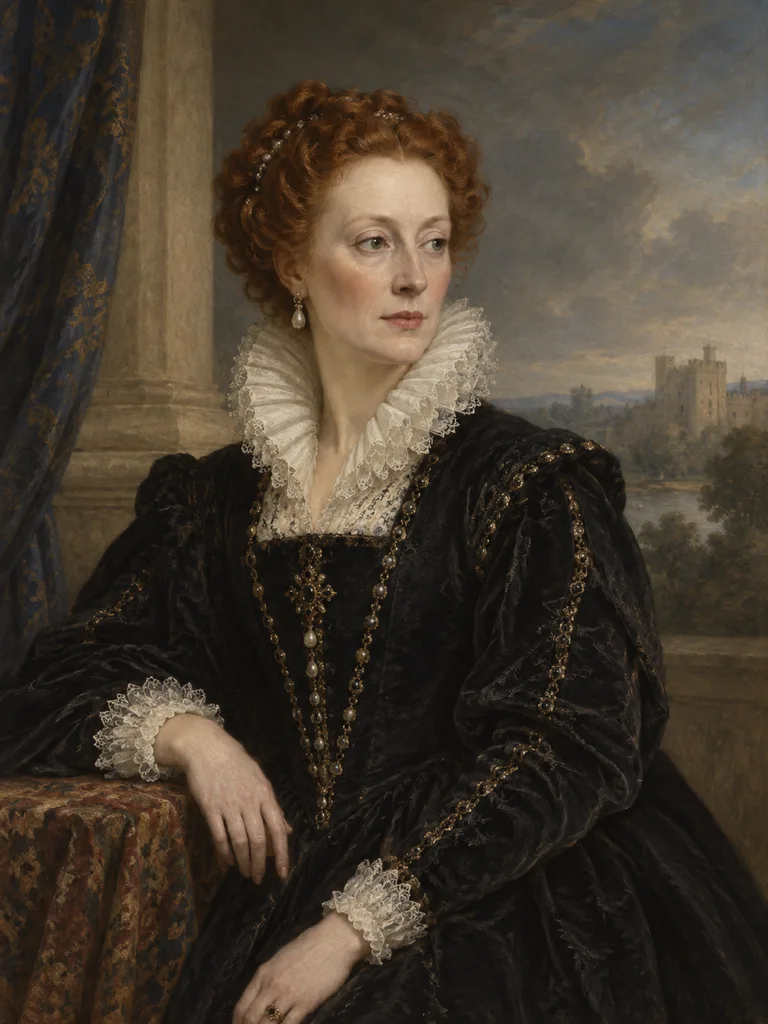
Created for Dylanvir LLC using Codex image generation from our original prompts.
AI-generated interpretation: face, clothing, and setting are imagined.
Follow one chapter at a time, or open the whole account.
01How it began
England and Wales; of Welsh origin, taking the throne when Henry Tudor defeated Richard III at Bosworth in 1485.
02At its height
Reign of Elizabeth I (1558-1603); the English Renaissance, the defeat of the Spanish Armada in 1588, and the start of overseas expansion.
Territory in the record
England, Wales (formally united by the Laws in Wales Acts), and lordship/kingship over Ireland.
03What became of it
Ended in 1603 with the death of the childless Elizabeth I; the crown passed to the Stuart James VI of Scotland.
04What remained
The English Reformation and Church of England, a strengthened centralized monarchy, and the foundations of England as a naval and Protestant power.
Flags, arms & symbols
A closer look at the designs associated with this entry. Open an illustration to read its story.
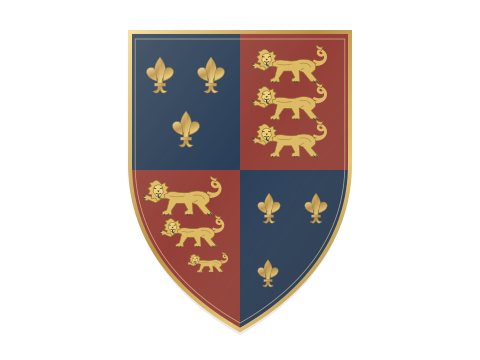 Coat of armsEngland and France, quarteredRoyal shield used by Elizabeth I, 1558-1603Read the symbolClose the story
The fleurs-de-lis of France alternate with the three lions of England. Quartering puts separate heraldic claims together on one shield.
This form was used by Elizabeth I and several earlier Tudor monarchs. Mary I used a different combination. The illustration shows the shield alone, without crown, supporters or motto.
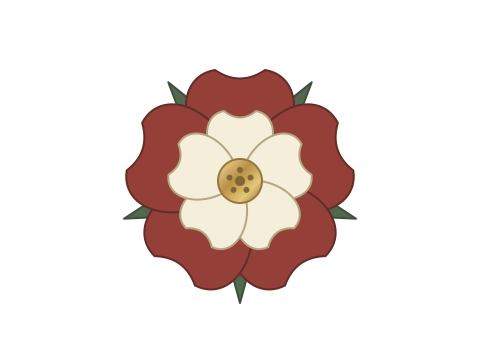 BadgeThe Tudor roseTudor dynasty, 1485-1603Read the symbolClose the story
Five red outer petals surround five white inner petals. The two colours are combined within a single flower.
A dynastic badge, distinct from the royal coat of arms. This larger study preserves the rose that appeared in the first illustrated version of this volume.
Original illustrations for Dylanvir LLC, drawn with Codex after the linked historical references. These are schematic drawings, with simplified shapes and colours, not photographs of surviving objects. Each caption identifies the use shown.
Earlier illustration · another view of this entry
Made for Dylanvir LLC · about these images
The painted portraits and landscapes were created here with Codex image generation from our original prompts, written for this collection. They are original generated illustrations, not photographs or reproductions of archival portraits.
Each house portrait accompanies a person already named in its account. Faces, clothing, and settings are imagined; a realistic painting does not establish a historical likeness. Entries without a named figure keep their text without an invented representative.
The flags and heraldic drawings are original illustrations for Dylanvir LLC, drawn with Codex after their linked historical references. The designs themselves belong to their historical or living traditions. Captions distinguish flags, coats of arms, parts of arms, and badges, and identify the period and use shown.
This reading keeps the wording of the atlas's public house entry. The people named here are those in this entry, not a complete family tree. About the sources ↗