
Volume III · The Houses
Khazar Khaganate
A Turkic steppe polity that emerged in the mid-7th century (c. 650) on the lower Volga and the Pontic-Caspian steppe north of the Caucasus, growing out of the western Turkic khaganate after it fragmented.
This entry has no dated engagement span in the atlas yet.
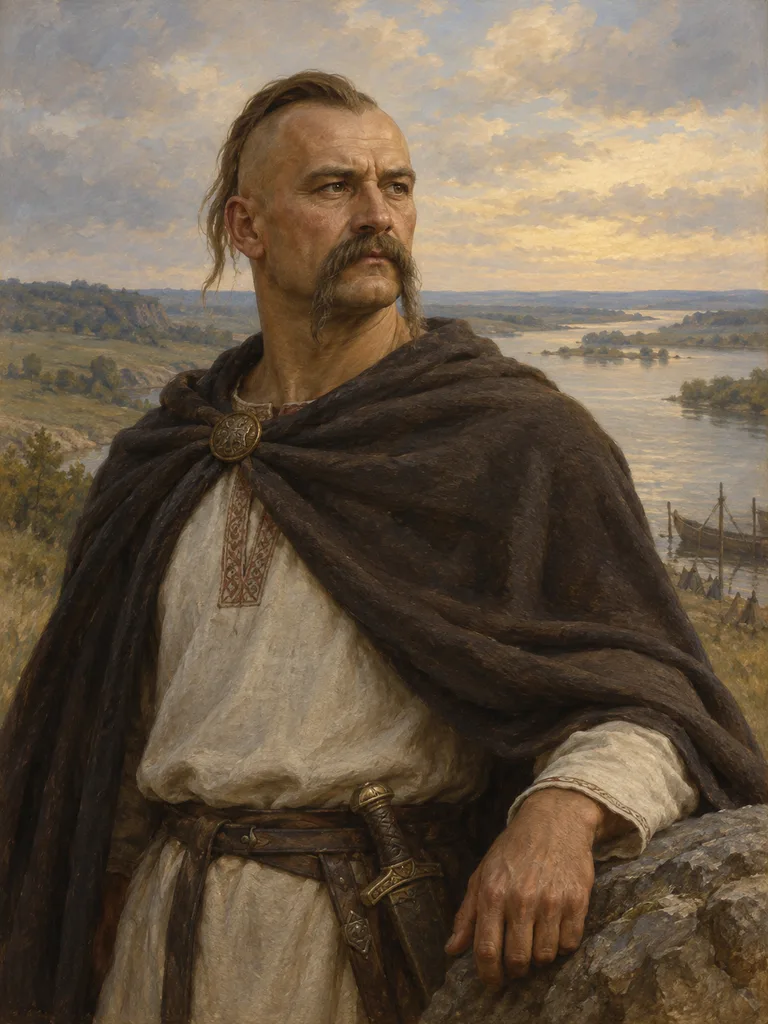
Created for Dylanvir LLC using Codex image generation from our original prompts.
AI-generated interpretation: face, clothing, and setting are imagined.
Follow one chapter at a time, or open the whole account.
01How it began
A Turkic steppe polity that emerged in the mid-7th century (c. 650) on the lower Volga and the Pontic-Caspian steppe north of the Caucasus, growing out of the western Turkic khaganate after it fragmented.
02At its height
8th to early 10th century: a dominant power controlling the north-south and east-west trade between the Abbasid Caliphate, Byzantium, and the forests and rivers of the north, taxing the flow of furs, slaves, and silver and fielding armies that fought the Arabs to a standstill in the Caucasus.
Territory in the record
The Volga-Caspian and Pontic steppe: the lower Volga (capital at Atil), the northern Caucasus, Crimea, and loose overlordship of neighboring Slavic and steppe peoples.
03What became of it
Broken in the 960s by the rising Rus under Sviatoslav of Kiev, who sacked the Khazar cities around 965-969. The khaganate disintegrated, absorbed by the Rus, the Pechenegs, and later steppe powers.
04What remained
For three centuries the Khazars were the shield of eastern Europe, blocking Arab expansion north of the Caucasus and stabilizing the steppe corridor along which Rus, Byzantine, and Islamic trade flowed. Their most famous act was a religious one: the ruling elite's conversion to Judaism, a deliberate third path between Christian Byzantium and the Muslim Caliphate that has fascinated and divided historians ever since.
Made for Dylanvir LLC · about these images
The painted portraits and landscapes were created here with Codex image generation from our original prompts, written for this collection. They are original generated illustrations, not photographs or reproductions of archival portraits.
Each house portrait accompanies a person already named in its account. Faces, clothing, and settings are imagined; a realistic painting does not establish a historical likeness. Entries without a named figure keep their text without an invented representative.
The flags and heraldic drawings are original illustrations for Dylanvir LLC, drawn with Codex after their linked historical references. The designs themselves belong to their historical or living traditions. Captions distinguish flags, coats of arms, parts of arms, and badges, and identify the period and use shown.
This reading keeps the wording of the atlas's public house entry. The people named here are those in this entry, not a complete family tree. About the sources ↗